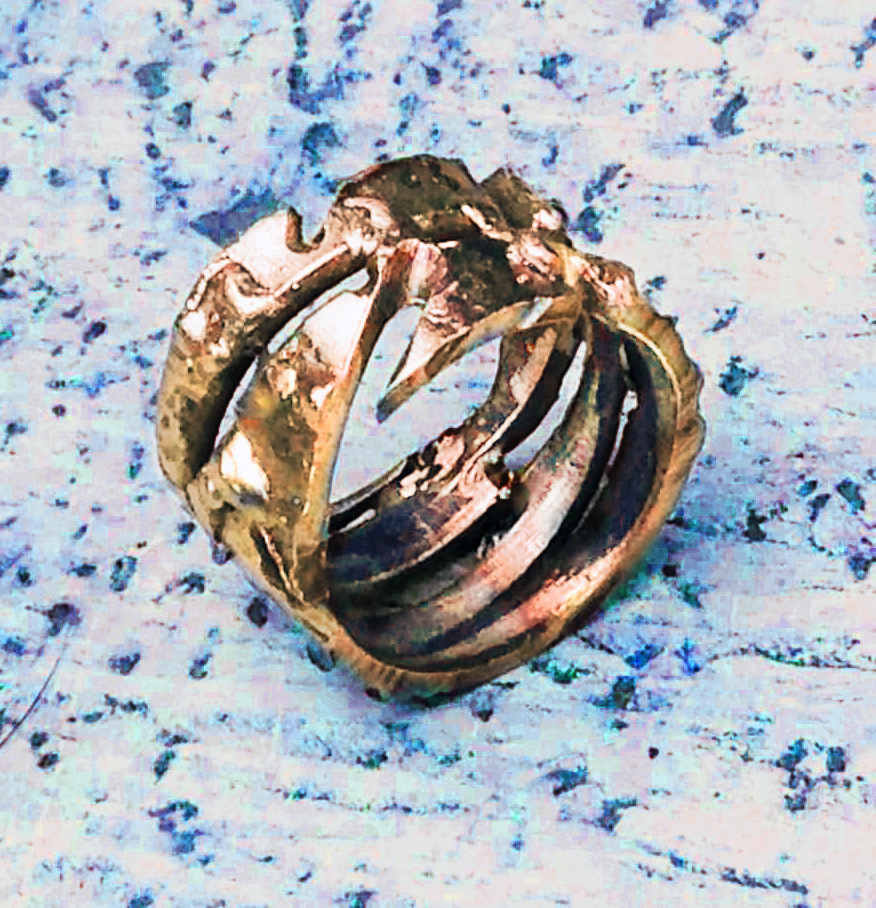
3i.Atlas 2025
EJan was born in 2000 with the birth of Elea, JanRuju's daughter. Twenty-five years of studio work in Milan, outside market logics. No brand, no catalog. Only matter, fire, time, gesture.
Forged iron, unearthed copper, aluminum, melted plastic, carved wood, mixed found materials. Modeled wax. Cast bronze and brass. 925 silver. Gold plating in five colors. Each piece is a world that survives its origin.
€30,000 goal in 30 days. It serves to bring the collection out of the studio: artist certificates, scenographic display cases, tracked international shipments. Destination: Munich Jewellery Week 2027.
It is not a ring, it is a collection of rings dedicated to Elea.
The day Elea was born, Gianluigi Ruju walked out not knowing where he was going. He walked through the streets of Milan — abandoned warehouses, provincial workshops, peripheral sidewalks. He walked for hours. And he bent down to pick up a rusty piece of iron from the ground — one of those everyone walks past.
He put it in his pocket. He went back to the studio, brought it to the anvil, softened it with fire, bent it with the hammer. And from his hands the first EJan ring emerged.
He didn't know he had founded anything. He knew he had given his newborn daughter a fragment of the world held together by his gesture. He was a father, not an artist wanting to start a series. But that gesture — walking, picking up, forging, giving back form — never ended.
Every week ejan janruju went out to collect. Electrical wires found in construction dumpsters, rusted wrenches from workshop courtyards, plastic caps blown by wind on sidewalks, copper sheets extracted from old roofs. He brought everything back to the camper. He cleaned it. He observed it. He transformed it.
In 2005 the collection was 30 pieces hanging from a string in the studio. In 2010, 80. There was no list, no showcase, no catalog. There was only an artist repeating the same gesture every day — walking, picking up, forging — and a daughter growing up next to a father who made sculpture for her.
In 2015 the pieces were 150 — and for the first time ejan janruju thought he had to protect what he was doing. He began numbering them. Photographing them one by one. Distinguishing the series. The master logic was born: forty iron and copper pieces — all hand-forged, all unique, all unrepeatable. It's the FE series, the core of the project.
Then came the discovery of casting. Some masters are used as molds to create clones in noble metal: bronze, brass, silver. The original gesture survives in the copy — it doesn't lose value, it multiplies in parallel forms. Each clone is still a unique piece (each casting is different) but descends from a specific master. The master/clone logic that today is the signature of the project is born.
In 2020 the collection counts 220 documented pieces with provisional certificate. ejan janruju experiments with the first test laser engraving.
In 2024 the ALIENS RINGS collection closes at 214 official pieces: 40 iron/copper masters (FE), 20 pure copper masters (RA), 7 aluminum masters (AL — the "Seven Skies" Aluminum Collection), 20 melted plastic masters (PL), 10 carved wood masters (LE), 18 found mixed materials masters (MX), 5 wax masters for Genesis (CE). Plus the clones: 32 in bronze/brass from FE originals (BO-I), 22 in bronze/brass from models (BO-II), 40 in 925 silver (AR).
In 2025 the new collection opens: 3i.Atlas. It's not a catalog, it's a direction. A leap forward in material and formal research — pieces not yet in the distribution channel, reserved for The Leap tier backers as cultural preview.
It's no coincidence this happens in 2026. It's the year of ejan janruju's personal turning point: after forty years of work in dozens of realities, projects, different assignments — creative director, general manager, non-profit president, strategic consultant, startup founder — in mid-2026 the radical choice to change life begins to mature. At the end of May 2026 he purchases a 1981 Ford camper completely to be restored — it will be home and workshop together. The restoration is in progress right now and will be completed by end of September 2026. From late 2026 the new life begins: the workshop becomes mobile, moving from festival to festival, from city to city, from market to market. EJan Wearable Sculptures leaves the studio at the same moment the artist leaves his own previous life. It's not coincidence — it's the crowning.
Kickstarter is the chosen door. Not a gallery, not an e-commerce, not a commercial launch. It's the platform that allows an artist to speak directly to his first collectors — without mediation, without intermediaries, without market hierarchies. The campaign serves to produce signed artist certificates, scenographic display cases, tracked international shipments, dedicated laser engravings. It serves to bring EJan to the world — first to the small world of backers, then to Munich Jewellery Week 2027, then wherever the camper stops.
ejan janruju doesn't buy new materials. For twenty-five years every EJan piece has been born from something that was already in this world — a picked-up fragment, a saved scrap, an everyday object reshaped. It's an ethical method before being artistic. But above all it's a way of listening to matter.
Every week the artist walks out of the studio. Construction yards, abandoned warehouses, neighborhood workshops, Milan sidewalks. He looks down. He picks up what others walk over.
Not everything found becomes a piece. The material must already have its own visible story — rust, a bend, a trace of use. The biography of matter is the first thing.
In the studio matter is cleaned, cut, forged, cast, welded. But its origin remains readable — if you know how to look, you see the original piece inside the finished work.
The piece leaves transformed but its story is declared: in the authenticity certificate, in the piece description, in the choice not to camouflage the origin. Transparency is part of the gesture.
« The real gesture is not forging metal. The real gesture is walking in the morning, looking down, and seeing before others what the world has already discarded. »
The central concept of EJan: what falls into your hands + your gesture = ring. If the material is wearable, the piece stays itself (unique master). If the material isn't wearable (wax melts, the model wears out), it becomes the mold of a clone in noble metal — silver, bronze, brass, gold. The original gesture survives matter.
Found or recovered materials, directly wearable. The artist's hand speaks without mold intermediation. Each master exists only once in the world — if you lose it, there's no way to remake it.
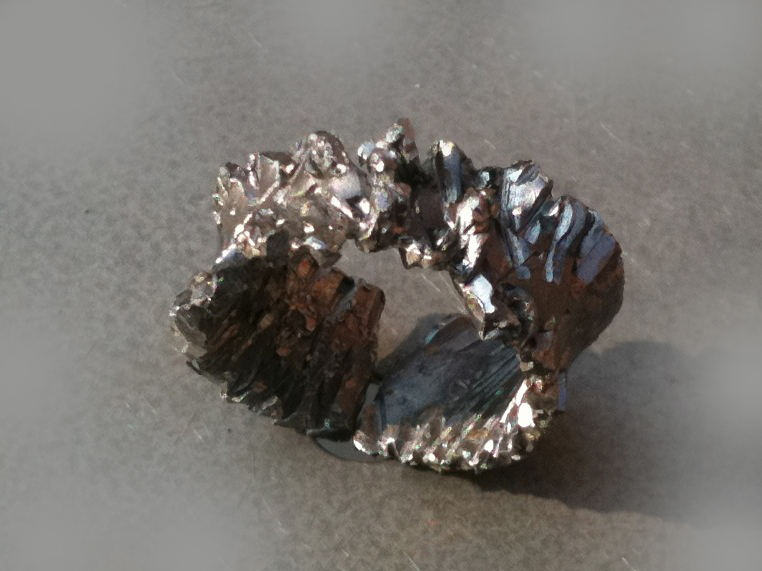
Some masters are modeled in wax to be used as molds. Wax melts in the casting process. A clone in noble metal is born: 925 silver, bronze, brass. Each clone is still a unique piece — each casting has imperfections, oxidations, different finishes — but descends from a specific master.
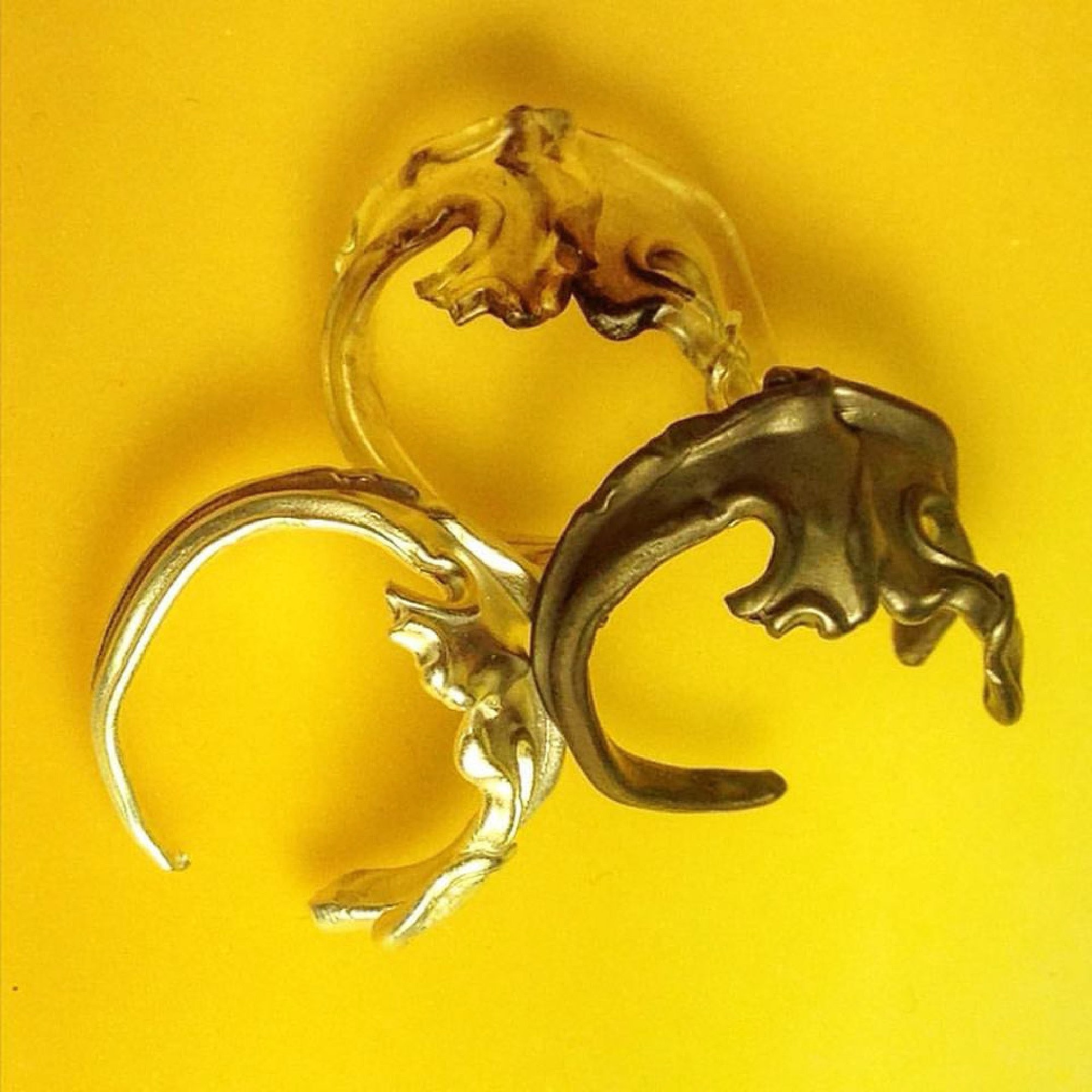
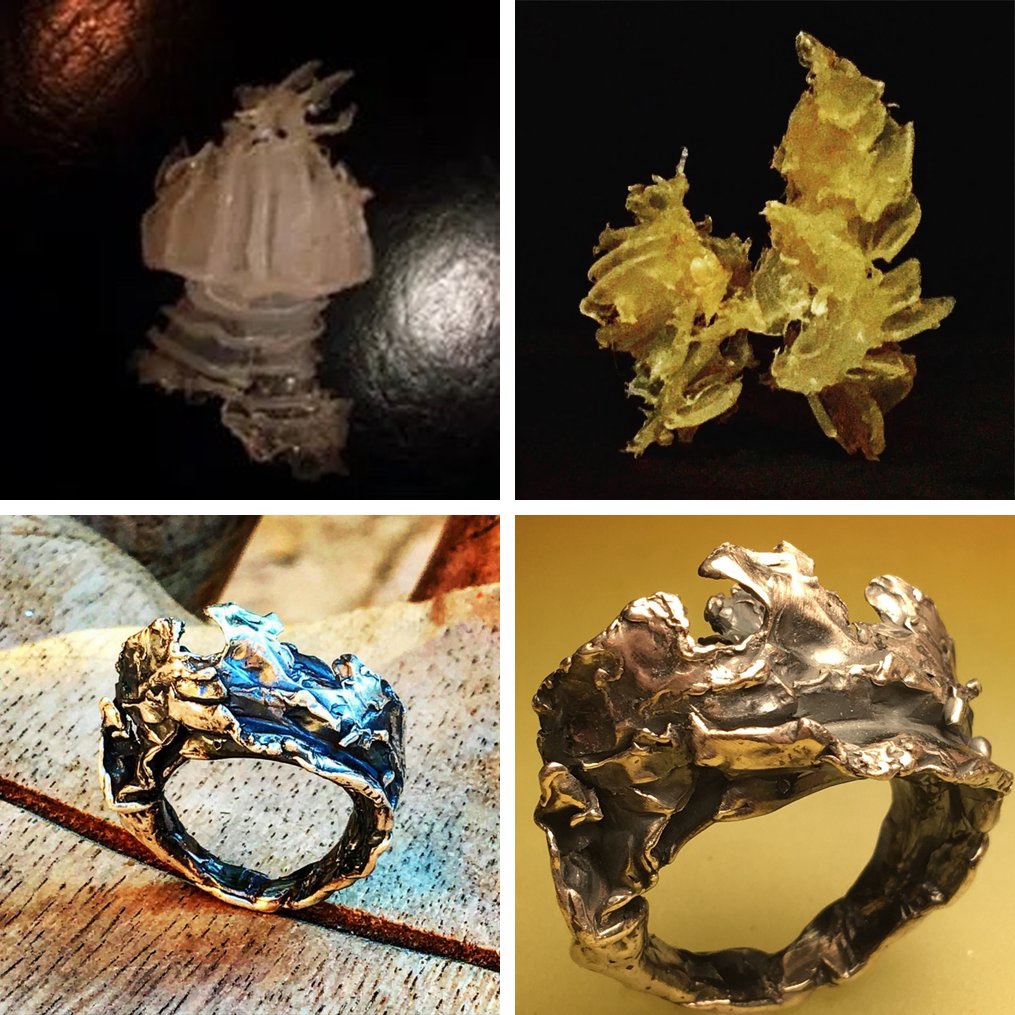
The visual manifesto · A transparent master (hot-bent plastic fork) + two clones in noble metal · The gesture survives matter.
Each EJan piece has a flat surface underneath obtained by milling. It's not a mechanical detail: it's the technical signature of the project. It serves two simultaneous purposes — and it's what makes each piece a double-life work.
The plane is the perfect surface for laser engraving of the unique serial code. Each piece bears written its own DNA: material, progressive number, possible finish suffix. The artist's technical signature.
The milled plane is geometrically perfect: the ring stands like a micro-sculpture. It lives when you wear it. It lives when you display it. You receive a ring and a sculpture together, in the same object.
« A ring that stands on its own is no longer just a ring: it's an artwork that has a right to a place on the shelf. Not only on the hand. »
EJan works ten categories of matter. Each has its own story — where it comes from, how it's transformed, what pieces it generates. Here the biography of each.
The metal of the industrial era. Humanity's first tool after bronze. EJan's iron comes from Milan's urban margins — construction sites, abandoned warehouses, provincial workshops.
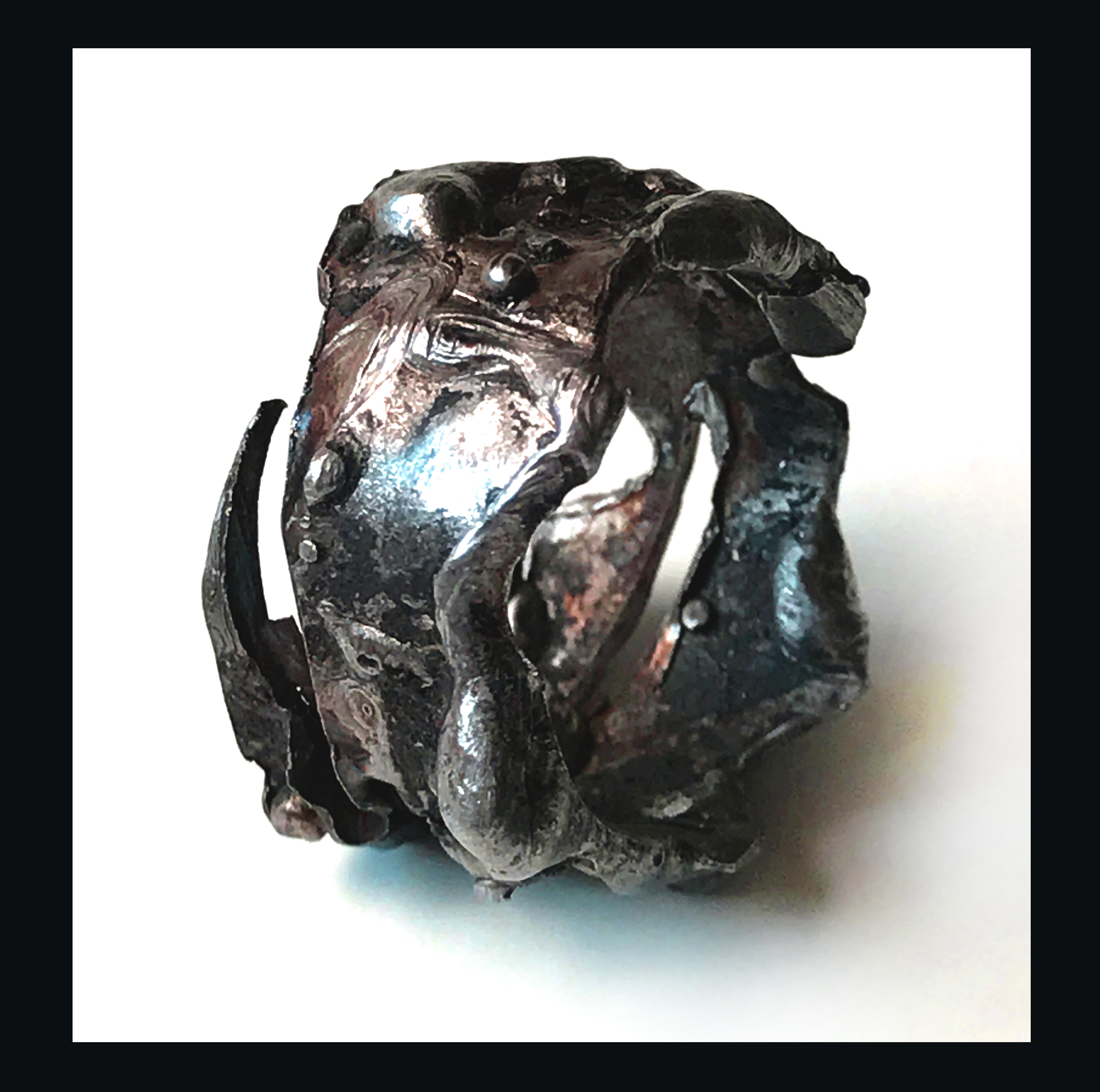
The collected piece is oxidized in a controlled way to bring its past back to the surface, then cleaned, hot-forged (about 900°C) on the anvil, hammered, welded. The industrial biography remains visible — the hammer marks, the welding imperfections, the memory of its previous lives. Finishes include cataphoresis (transparent protection) or gold plating in 5 colors.
The metal of transmission. Electric current, heat, time. EJan's copper comes mainly from recovered electrical wires, tubes from old plumbing systems, decommissioned coating sheets.
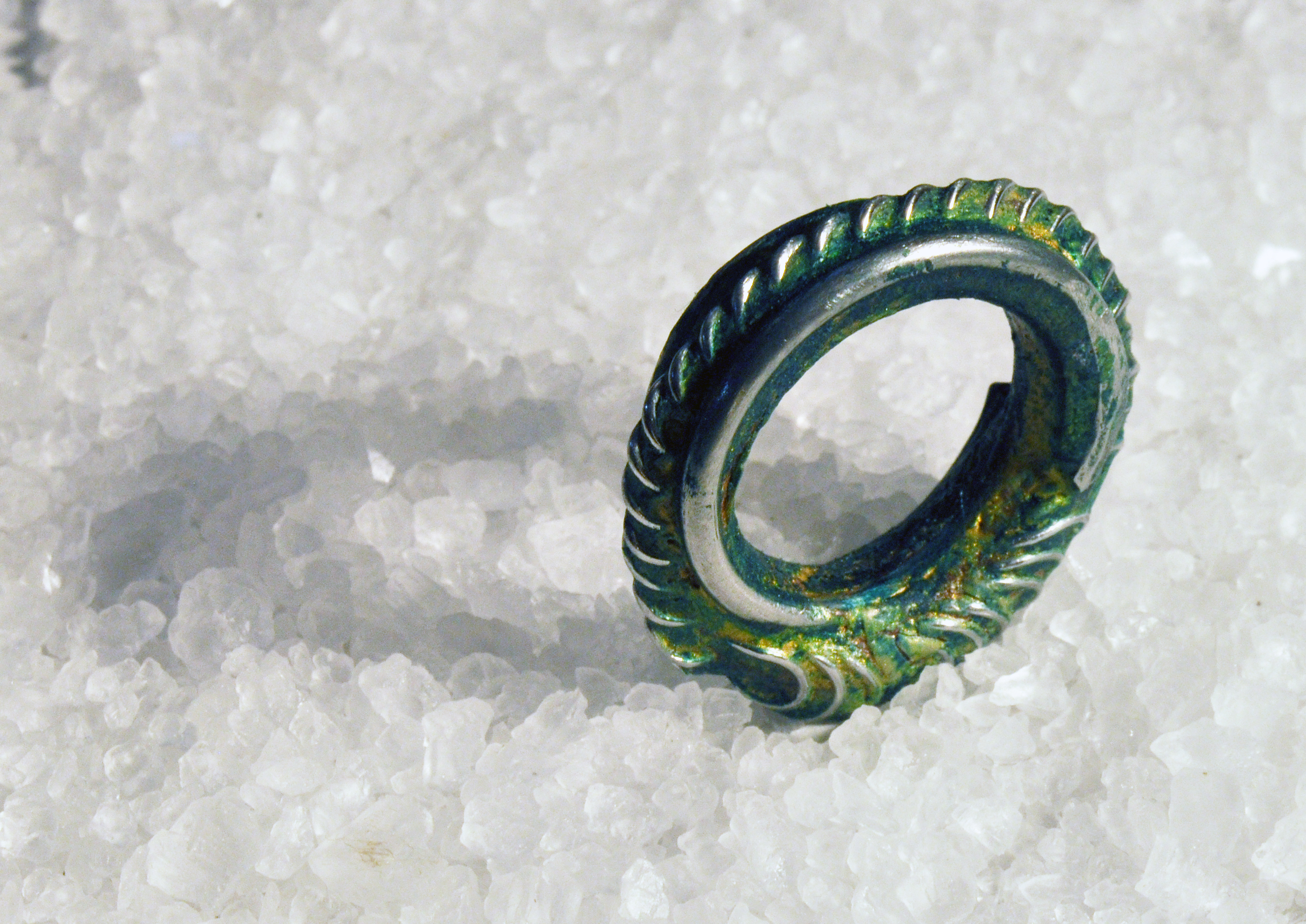
It has a unique quality: it oxidizes green (verdigris) and this oxidation is protective, poetic, alive. It's often worked in combination with iron in FE pieces, but there's a separate category of 20 pieces purely in copper that showcase the metal on its own. Finishes: natural green-copper patina, selective gold plating, burnishing.
The metal of aerospace and the future. Light, aeronautical. EJan's aluminum comes from cans, industrial profiles, decommissioned engine components.
7 pieces that make up the "Seven Skies" Aluminum Collection: one for each day of the week (MONdays, TUESdays, WEDNESdays, THURSdays, FRIdays, SATURdays, SUNdays). Each with a different shape representing the character of that day — a small weekly ritual to wear. Finishes: polishing, selective anodizing.
The material of our time. The quintessential waste, but also wonderful and polymorphic matter. EJan's plastic is collected everywhere — caps, containers, urban packaging.
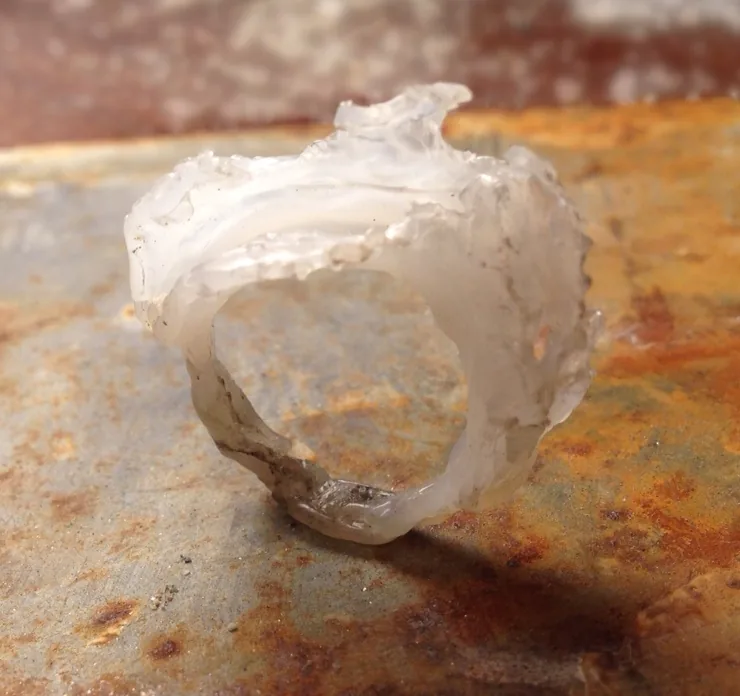
The processing is as poor as possible: melting happens directly with the lighter. Plastic changes state under heat, is hot-shaped, cools into organic almost volcanic forms. Each piece is a small tamed Vesuvius — a fragment of consumer plastic transformed into permanent sculpture. 20 PL pieces, each with original colors of the material transformed by heat.
The organic material. The memory of trees, of houses, of furniture. EJan's wood comes from planks of demolished houses, old abandoned furniture, urban prunings collected in Milan.
10 hand-carved pieces with gouges and mallet, in some cases combined with hot-welded metal inserts (copper, brass). Finishes: natural beeswax, linseed oil, selective burnishing. Each piece carries the memory of its previous life — the grain tells where the tree grew.
The category of the reshaped everyday object. Rusty wrenches. Bottle caps. Industrial screws. Machine fragments. Every everyday object can become wearable sculpture.
18 MX pieces, each a small story: the wrench that now opens only a finger, the cap that now closes a different world, the screw that now holds together the artist's gesture. The processing respects the origin — the object is still recognizable — but adds bending, welding, finishing that transform it into artwork. It's the most poetic category of the project.
The material of transformation. Not a final piece, but a bridge between two worlds. EJan's wax is hand-modeled — small sculptures in themselves, but not wearable in their original form.
5 wax masters preserved for the "Genesis" project: each used as a mold to cast a clone in 925 silver. In the Kickstarter campaign, both the wax master (sculptural display object) and the silver clone (wearable) are sold together as a pair — the "before" and "after" of the artistic gesture. A high-tier that tells the master/clone cycle in a single composite object.
The alloys of art history. Greek statues, Renaissance treasures, ancient instruments. Bronze (copper+tin) and brass (copper+zinc) are the metals of artistic permanence.
EJan's bronze/brass clones are born from artisanal lost-wax casting from the original masters. 32 BO-I pieces are cast directly from FE originals (bronze/brass that inherits the imprint of the artist's hand on the original iron). 22 BO-II pieces are cast from wax or plastic models. Finishes: controlled acid oxidation, green/red/black patinas, selective gold plating.
The noble metal par excellence. The alchemical metal. Solidified light. 925 silver is 92.5% pure sterling silver, the rest copper for strength — the alloy used for fine jewelry.
40 AR pieces: artisanally cast from models of previous series. Processing includes burnishing (controlled darkening with silver salt solutions), cataphoresis as protection, matte/polished/black/gold finish options. 925 silver is the most "recognizable" tier of the project — those coming to EJan from the classical jewelry universe find here the bridge to their sensitivity.
Not used as structural material but as surface finish. Galvanic gold plating transforms the color of the piece, increases resistance, adds a luminous chromatic dimension.
Five colors available — each is a true alloy obtained by balancing the plating. WHITE GOLD (elegant, mineral — gold + palladium). YELLOW GOLD (classic, warm — pure 24kt gold). RED GOLD (modern, contemporary — gold + copper). GREEN GOLD (alchemical, rare — gold + silver + copper). BLACK GOLD (futuristic, mysterious — gold + ruthenium). Applicable to silver, bronze, brass clones. Selective on iron/copper masters. Not applicable to plastic/wood/non-metallic materials.
Each EJan piece goes through a sequence of artisanal processes that ejan janruju has refined over twenty-five years of studio work. No industrial production, no automation — only the gesture repeated thousands of times until it becomes language.
The original act: walking through Milan, looking down, recognizing material that already has a story — a screw, a copper wire, a rusty iron fragment. No EJan piece is born from industrial supply purchase.
Light sandblasting, washing with degreasing solutions, brushing with brass bristles. The piece is freed from surface dirt but its natural patina is preserved where possible — original oxidation is part of the biography.
Iron is brought to about 900°C in the forge, becomes incandescent orange, is beaten on the anvil with the hammer. Each blow leaves a visible trace — it's the DNA of the artist's gesture imprinted in the metal forever.
Two different fragments become one piece. The weld isn't camouflaged: the bead is visible, declared, part of the aesthetic language. Each weld is a small story of two matters choosing each other.
Some masters are modeled in wax — a material that allows very fine details but is destined to disappear in the casting process. Wax is the sculpture of the negative, the gesture preparing to become noble metal.
The ancient technique born in the Renaissance: the wax master is coated with a refractory plaster shell. The wax melts and flows away in the furnace. Molten metal — silver, bronze, brass — is poured into the empty shell. The clone is born.
Some castings don't go through wax: the original master is directly coated with refractory earth and sacrificed in the process. It's casting from FR original — generates BO-I clones. The master is lost, the gesture survives.
The poorest possible technique applied to plastic. The tobacconist's lighter heats the scrap plastic fragment. It changes state, becomes moldable, cools into volcanic organic forms. The direct method, without studio equipment.
Gouges of different radii and mallet. The wood is roughed, then sanded, then finished with pumice and wax. Some pieces receive hot-welded metal inserts — small copper or brass joints that dialogue with the organic fiber.
The technique that allows combining different materials in the same piece — metal in wood, ceramic in bronze, glass in silver. Each insertion must be calculated for different thermal expansions.
A perfect flat plane is milled under every EJan ring. This plane has two functions: surface for laser engraving of the code + allows the ring to stand on its own as a micro-sculpture. It's the technical signature of the project.
On the milled plane the unique piece code is laser engraved — e.g. FE-023-BR. The character is clean, industrial sans-serif, height about 1.5 mm. Each code is registered in the artist's database and verifiable.
Selective acids are applied with a brush to create controlled patinas. Copper-green on bronze, blue on copper, black-burnished on silver. Oxidation isn't a defect: it's added value that accelerates time — what nature would do in decades.
Electrophoretic deposition of a transparent protective film. The piece is immersed in an electrically charged resin bath, gets covered with an invisible layer that protects from oxidative corrosion without modifying its appearance.
The piece is immersed in an electrolytic bath containing gold salts. Under voltage, gold deposits atom by atom on the surface. The chosen alloy determines the final color: white (gold+palladium), yellow (pure gold), red (gold+copper), green (gold+silver), black (gold+ruthenium).
Silver salt solutions are applied to 925 silver to create controlled darkening. That "elegant opacity" is born, giving depth to the metal and enhancing polished areas by contrast.
Linen cloth, polishing paste, artist's wax. Polishing is done selectively — only where needed, never to cover the traces of processing. The texture of matter must be respected.
Alternative to polishing: light sandblasting that creates a uniform, matte, non-reflective surface. The piece catches light differently — less spectacular, more solemn, more "museum-like".
Certificate of authenticity printed on cotton paper, hand-filled by ejan janruju with the specific data of the piece (title, materials, techniques, serial number, completion date), personally signed. It's the last operation before packaging.
Black box with screen-printed logo, internal soft-material protection. For high tiers (Meteorite, Portal, Constellation), premium wooden packaging. Tracked + insured shipping with partner carrier (DHL Express extra-EU, BRT/SDA Italy+EU).
Every piece exists. It's not a rendering, it's not a promise. Since 2000 the collection grows in the Milan studio — twenty-five documented years, 214 numbered and certified pieces.
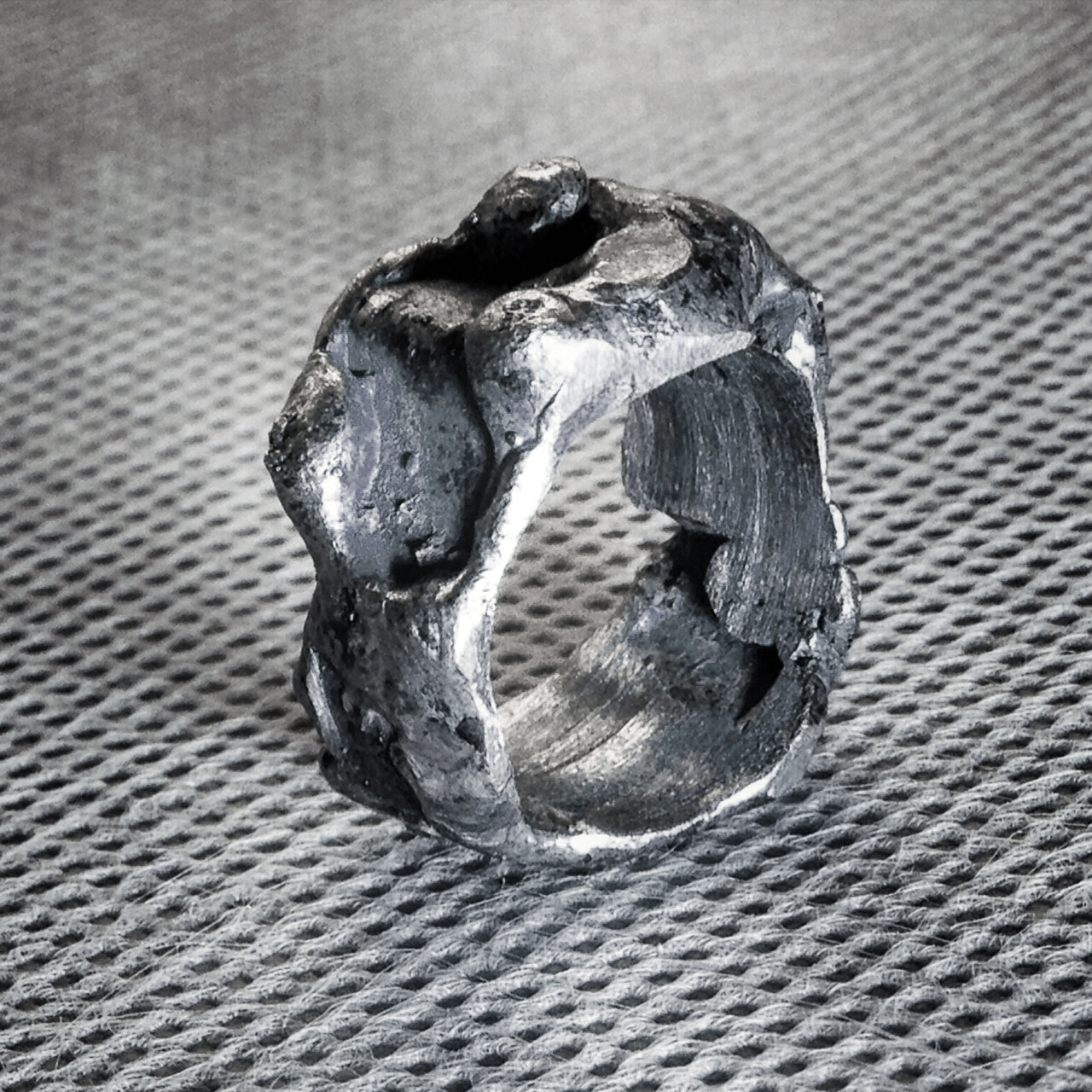
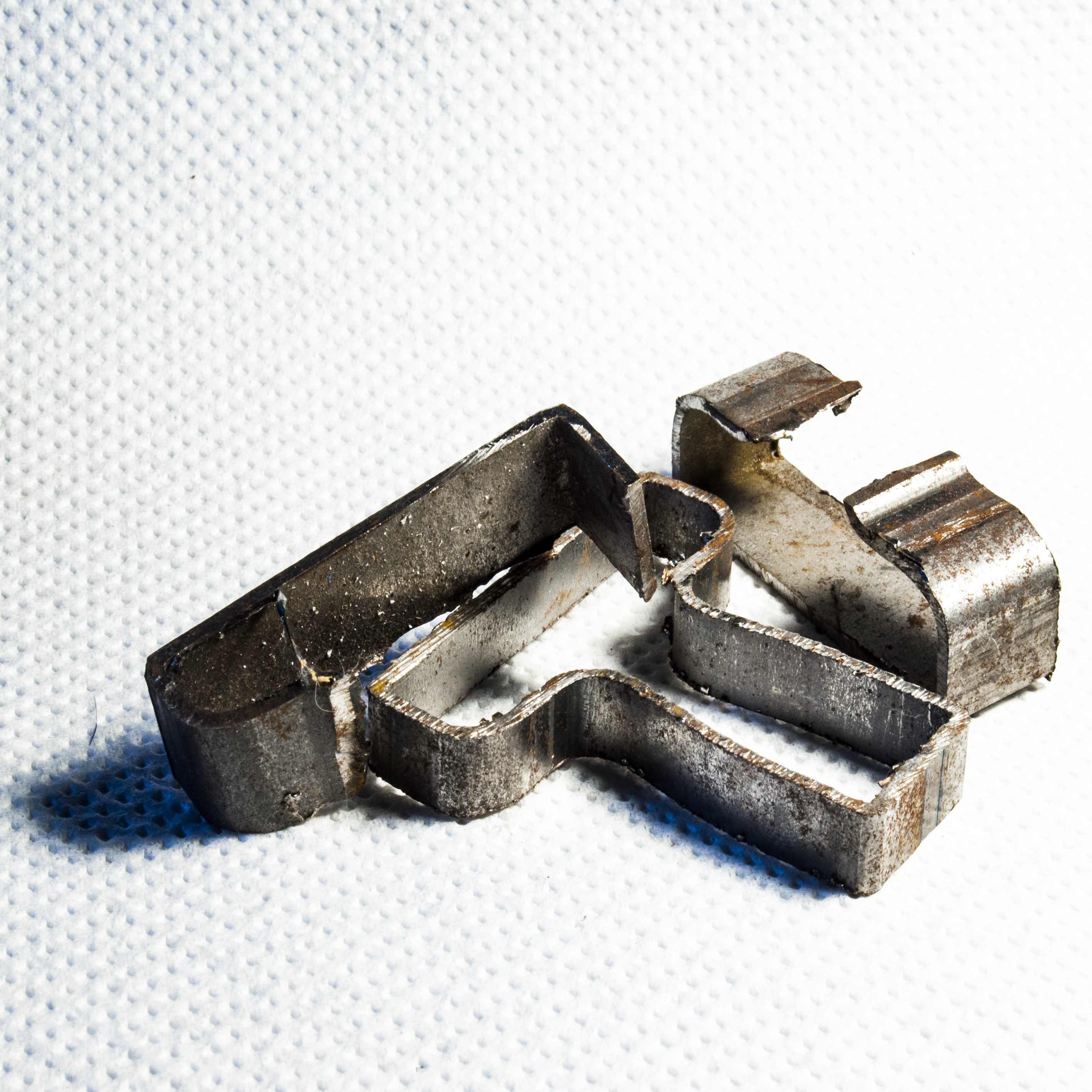
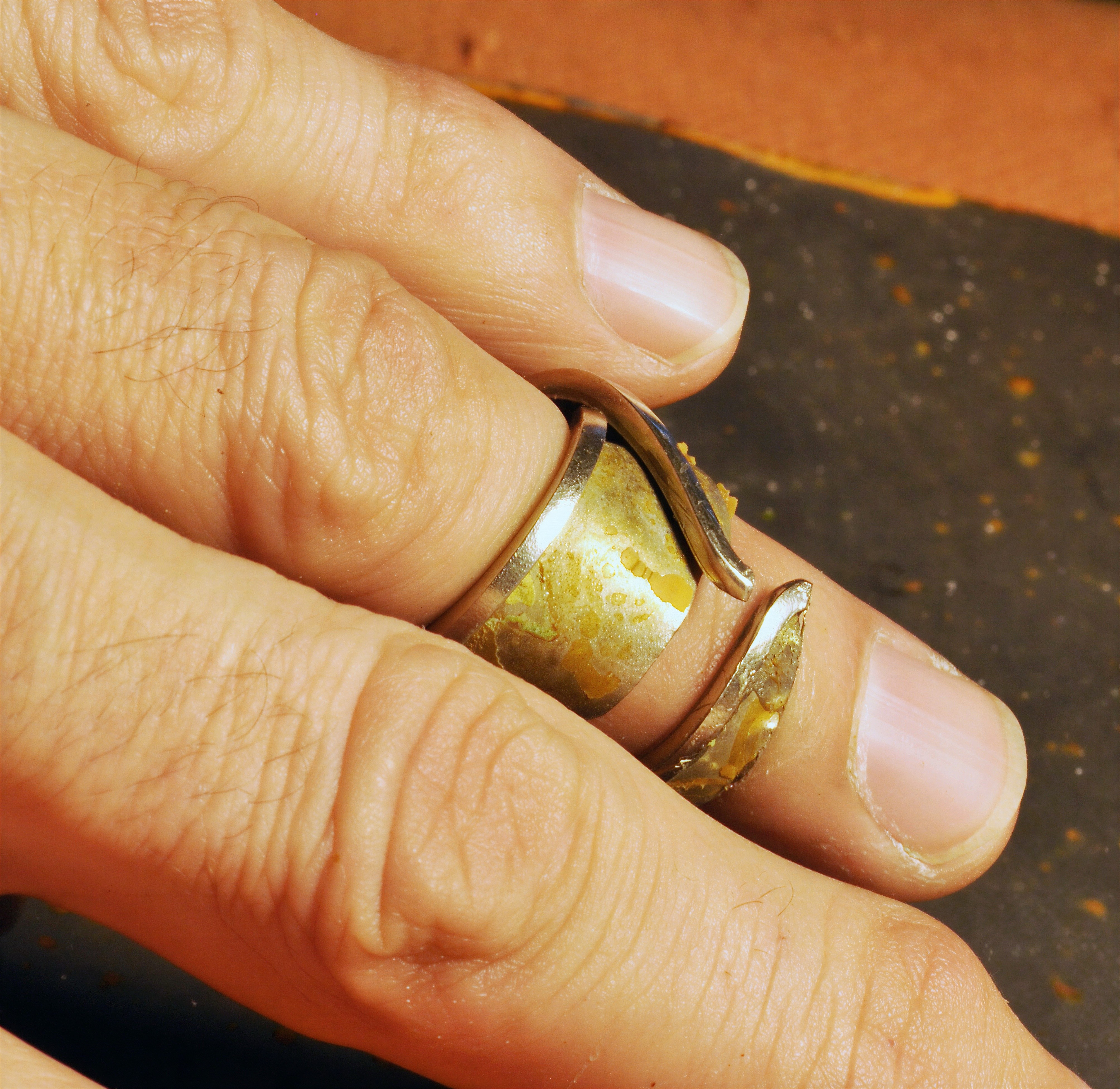
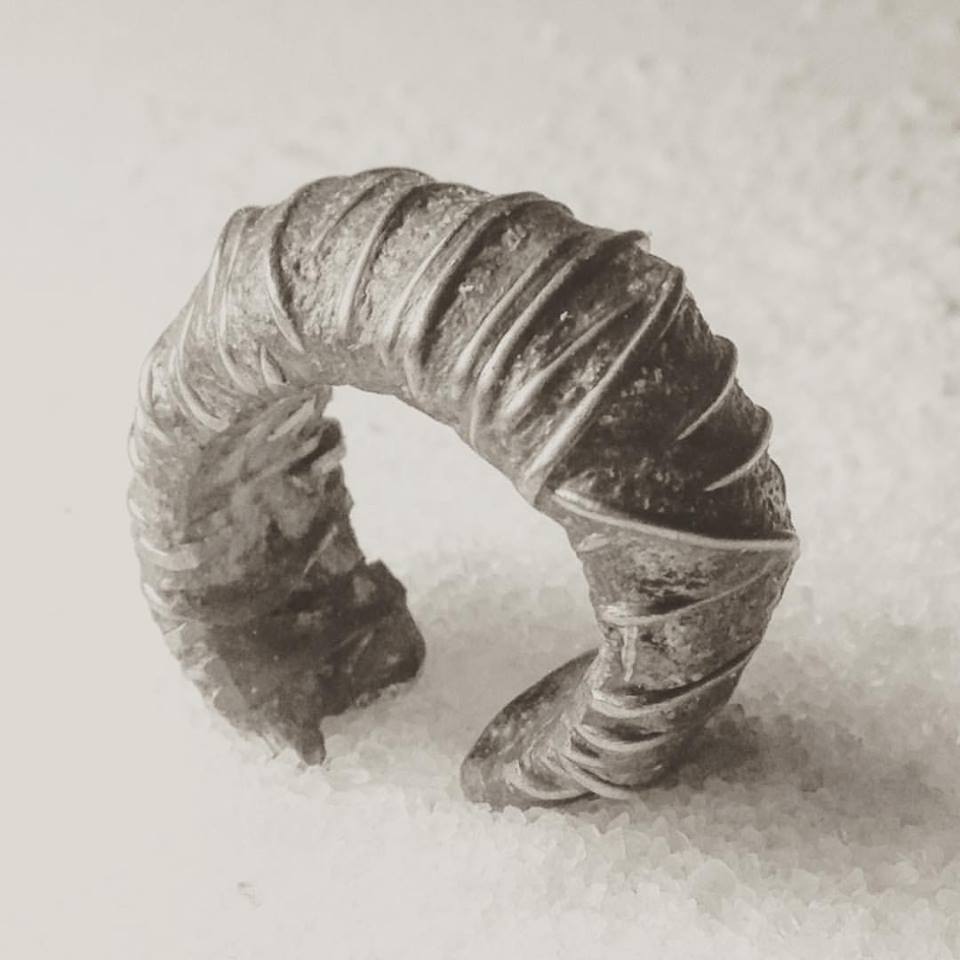

You're not buying "an object". You're buying the biography of a gesture — of a specific day, of a material found in a specific place, of a collaboration with a person or an animal or a fragment of the world. Here are some stories that become rewards of the Kickstarter campaign.
« Continuous research, trials, the passion for matter,
the great ability of hands, the gift of my hands,
creativity, strength. »
— JanRuju, manifesto
This is the true origin of the EJan project. The day Elea was born, ejan janruju took a transparent PVC water pipe from his home and cut it into slices with a box cutter. He put one on his newborn daughter's finger and one on his own. But PVC yellows on skin, so he decided to clone the first of those rings in gold, in honor of his daughter. That gold clone is still today on the artist's finger, 26 years later — it has become white gold from use and contact with skin. From this gesture the letter E of EJan is born. From this gesture the master→clone logic of the entire collection is born. Unique tribute tier: replica of the first PVC ring + 925 silver clone plated yellow gold + certificate with the original story + archive photo of the piece worn by the artist.
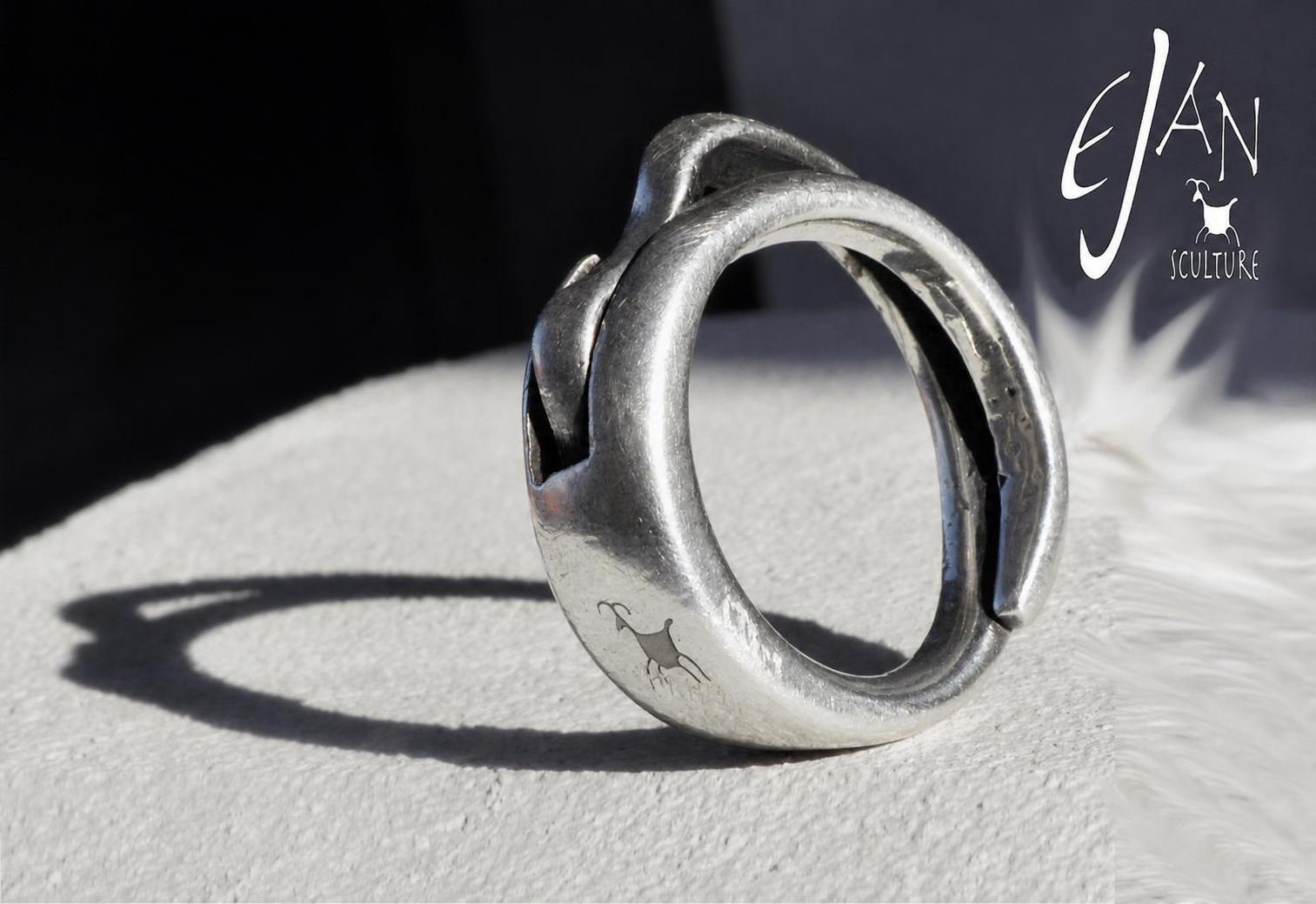
The first ring ever made by JanRuju. Found in Florence during the Pitti — a Gucci G banknote holder on the ground with 100,000 lire and no documents. Bent with two pliers on the train home. Worn for years. Then stolen during an event. Tribute tier with certified photo of the original piece + complete signed story + hand-sculpted silver replica with the iconic G.
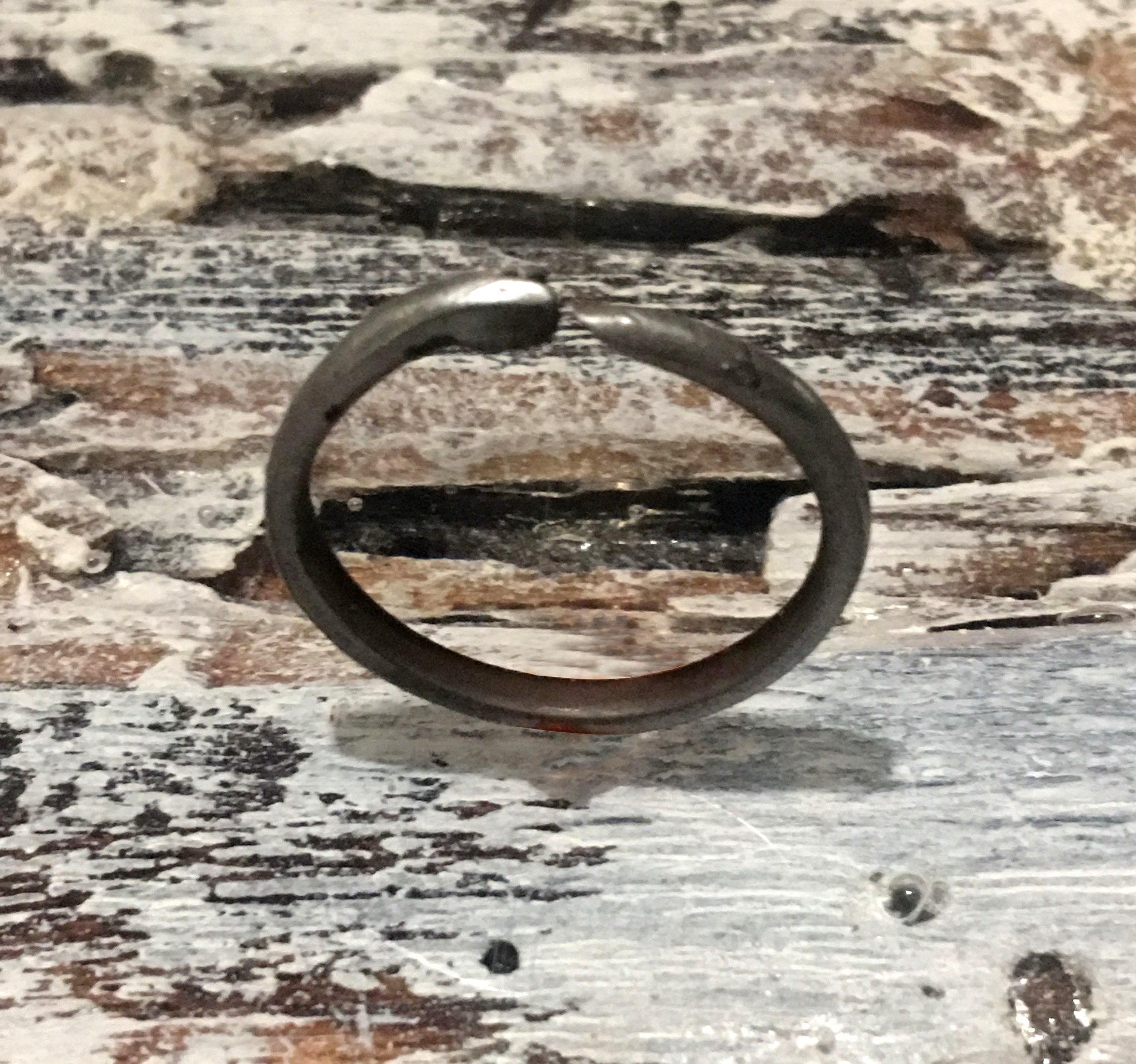
The first ring collected and bent in Milan — an iron nail found on the street, worn on the thumb. The zero gesture of the EJan method: walk, collect, transform. Replicas produced today from nails collected by the artist in the same streets of Parco Sud: each unique, with the explicit story of its urban origin.
The first Aliens Rings series from 2000, born with the birth of Elea. Masters obtained from washing machine plastic pipe fittings, cut with a box cutter. Clones in white gold and yellow gold, with pavé of white diamonds, red rubies, black diamonds. The crown of the project.
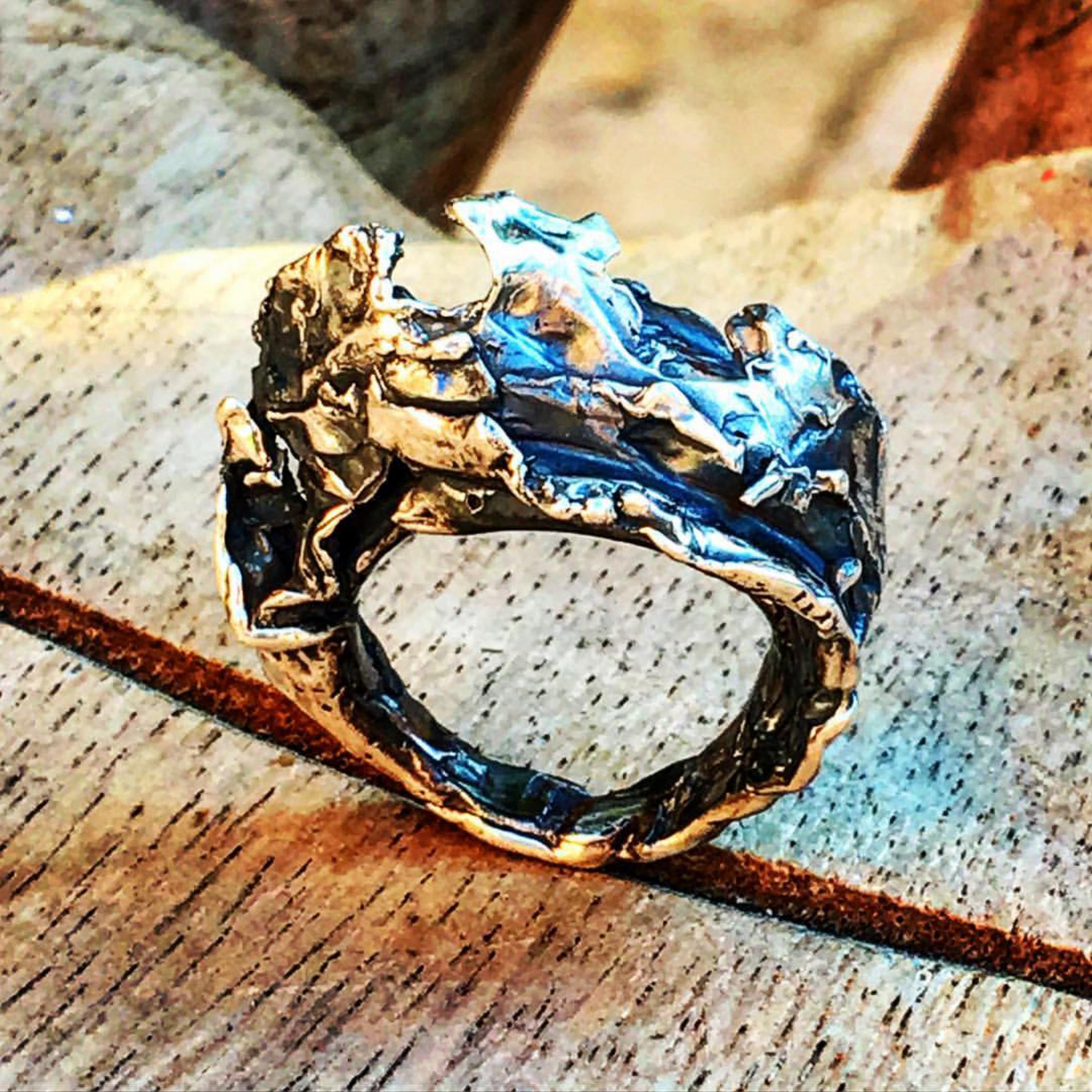
Born from the artistic collaboration with Stella, JanRuju's three-legged dog. Every time the artist opens a bottle of sparkling wine, the cork is chewed by Stella. The cork shaped by teeth becomes the master. Final clone in 925 silver plated white gold.
 Ph. Alessandra Cappellato
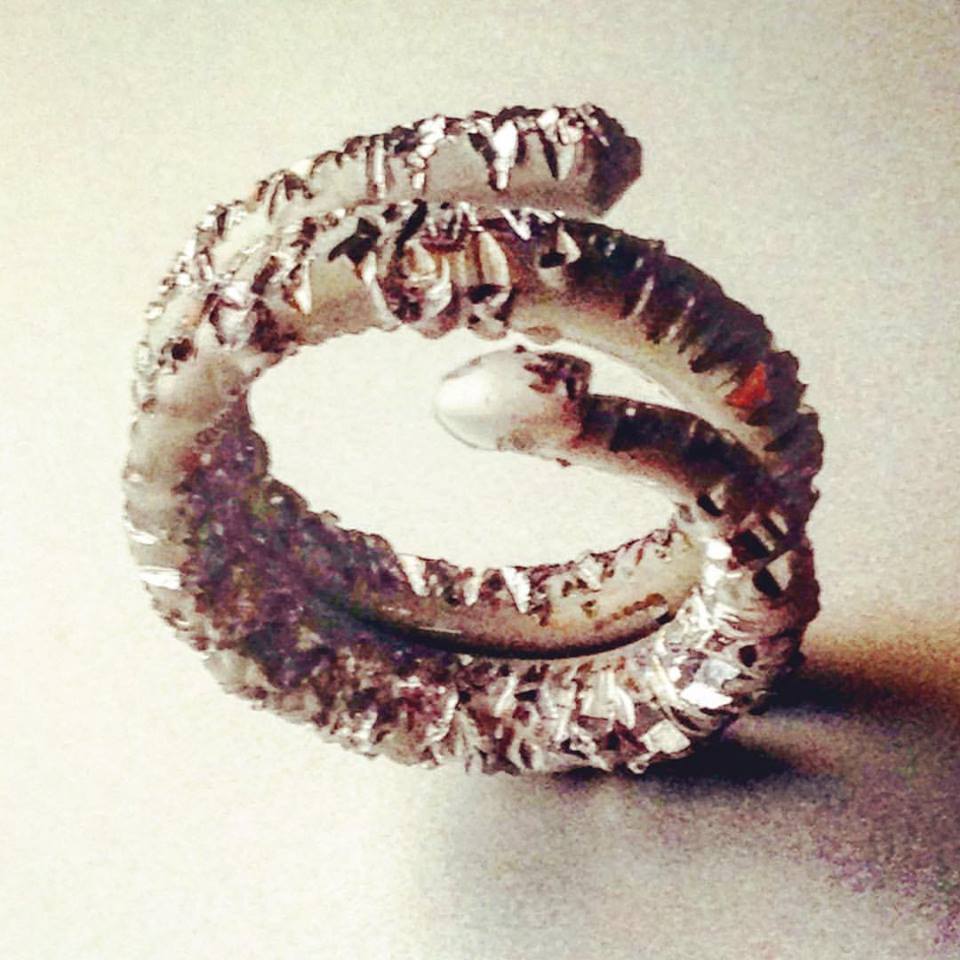
A ring obtained from grandmother Lina's crochet hooks (ejan janruju's grandmother), who used them for knitting. Ductile aluminum cold-bent with two tools (hammer + pliers), tip resembling a serpent's head, bitten texture. Family memory condensed into wearable sculpture.
Ph. Alessandra Cappellato
The set that perfectly manifests master/clone logic: a camping plastic fork hot-bent with lighter (master) + one clone in 925 silver + one clone in burnished bronze/brass. The collector owns the transparent "before" and the two noble "afters".
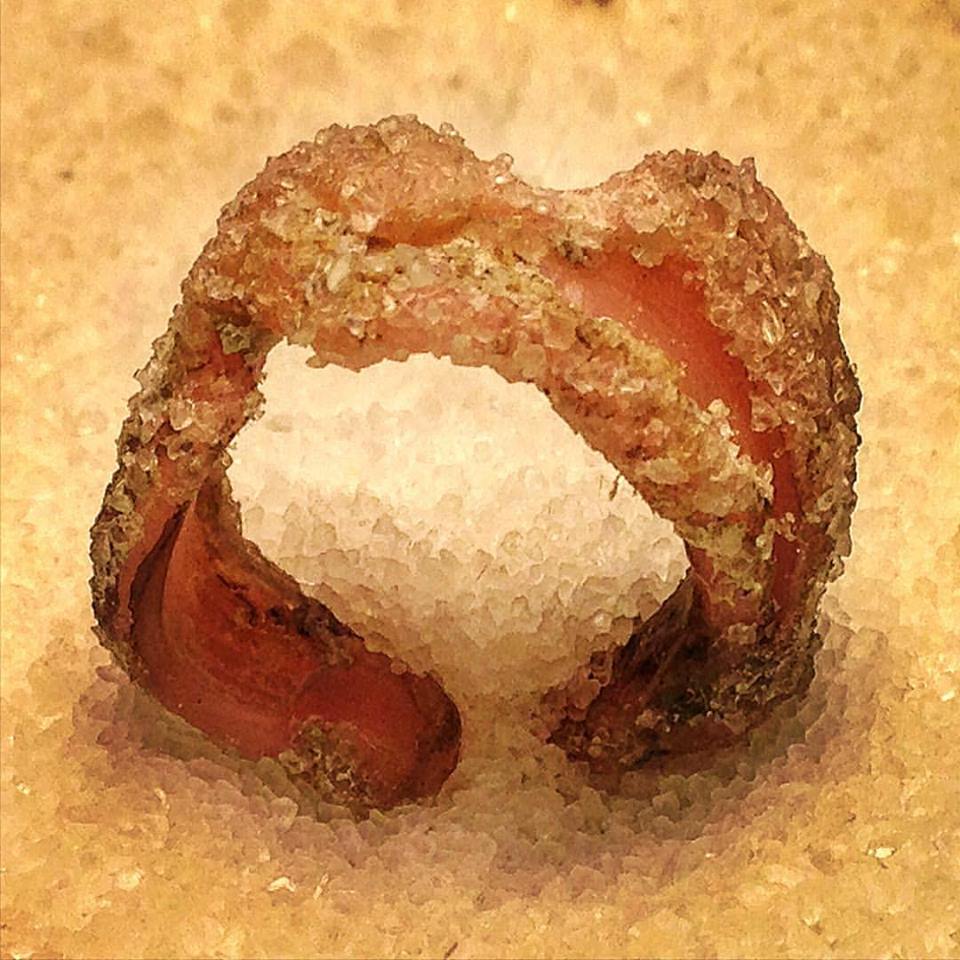
Master obtained with the crystallization technique: plastic melted with a lighter, then immersed while still soft in salt (remains stable), sugar (caramelizes in subsequent cooking), or sand. Unique mineral effects — they look like marine fossils or lunar rocks.
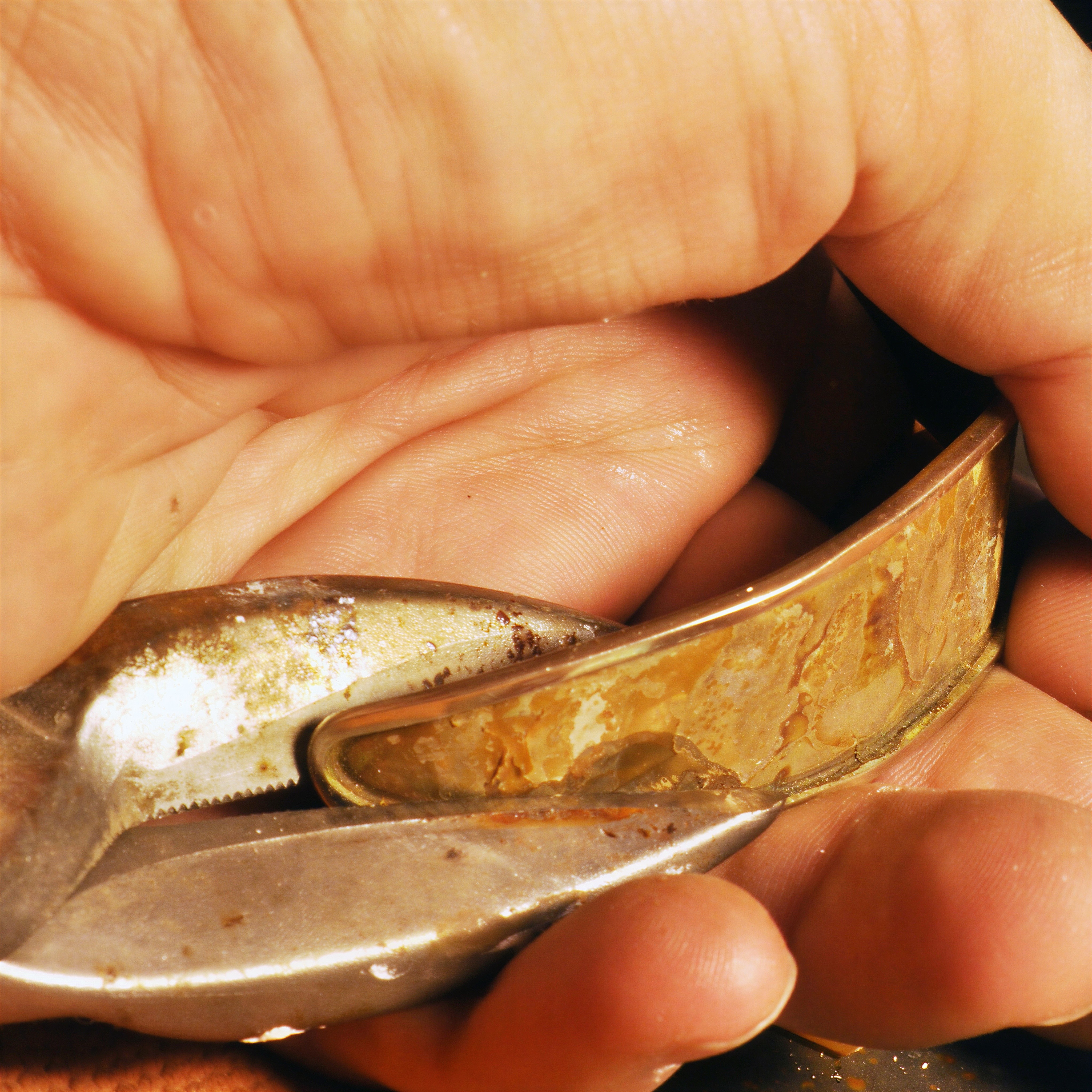
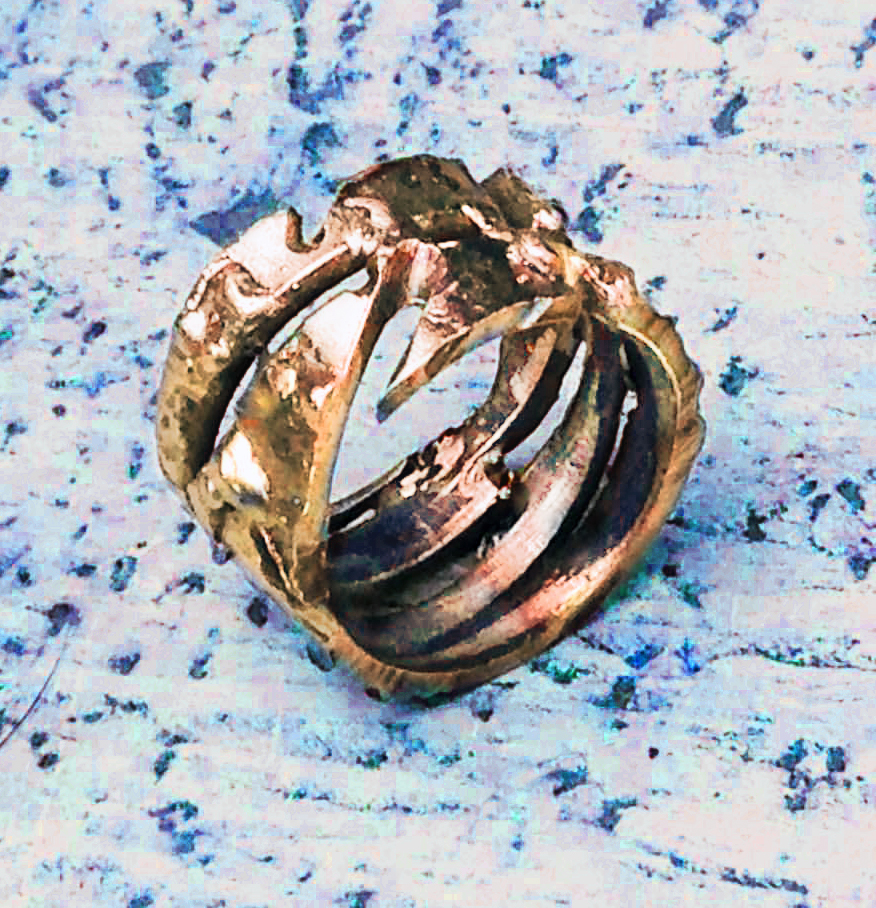
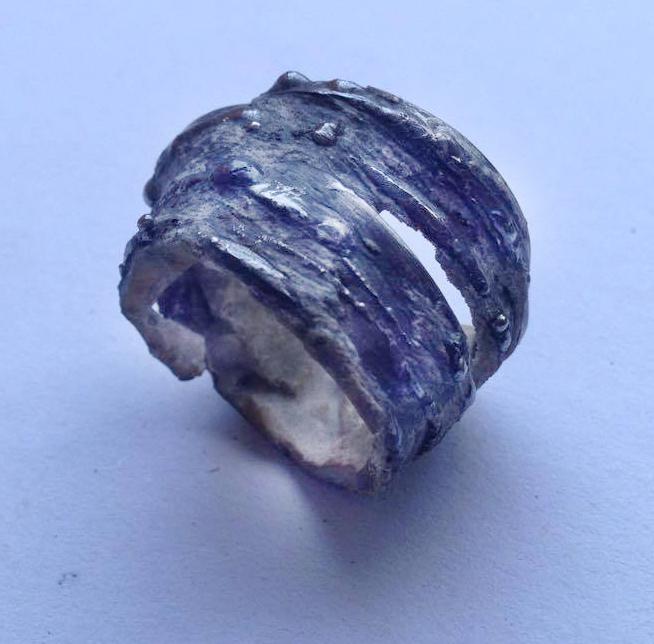
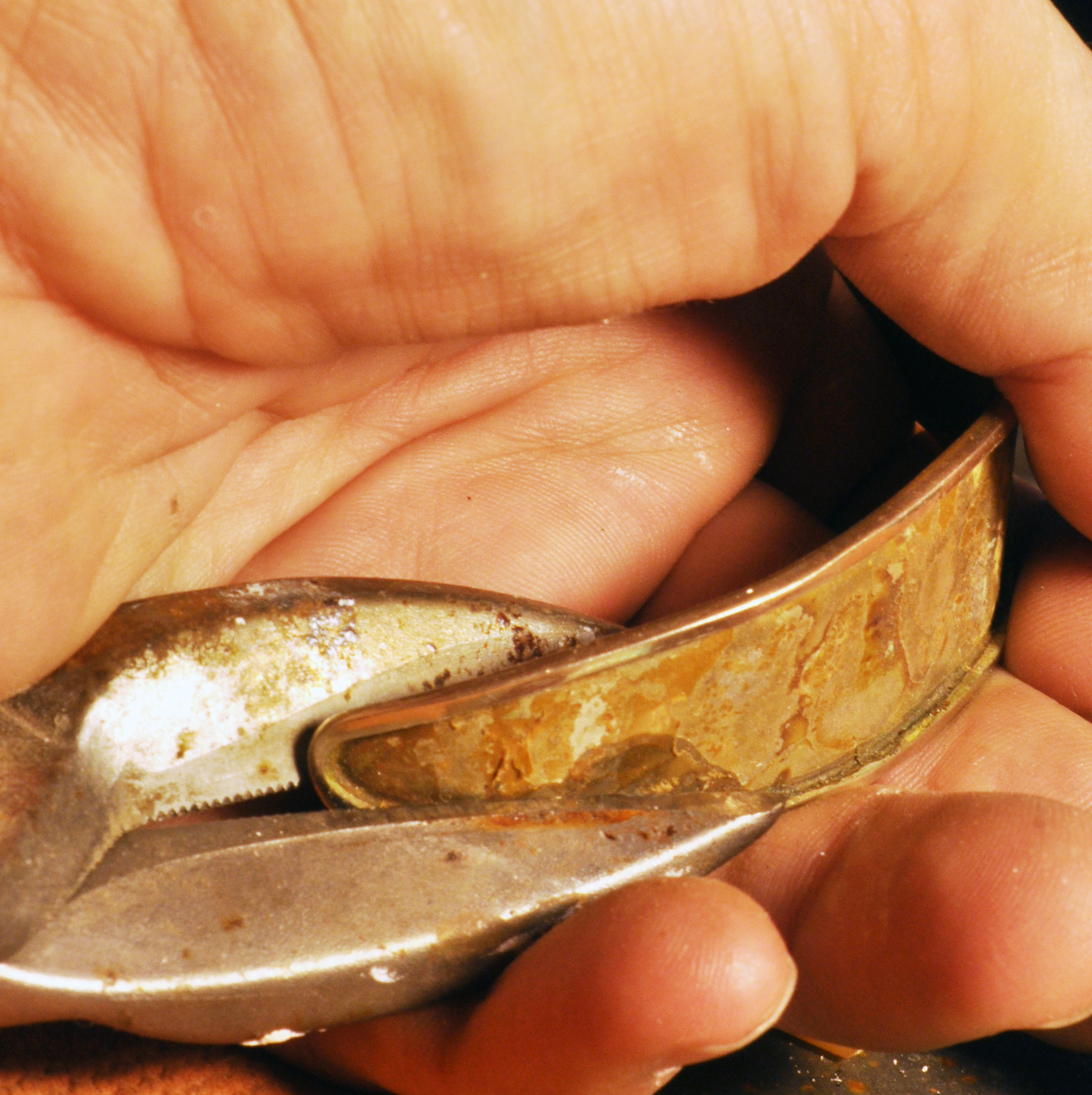
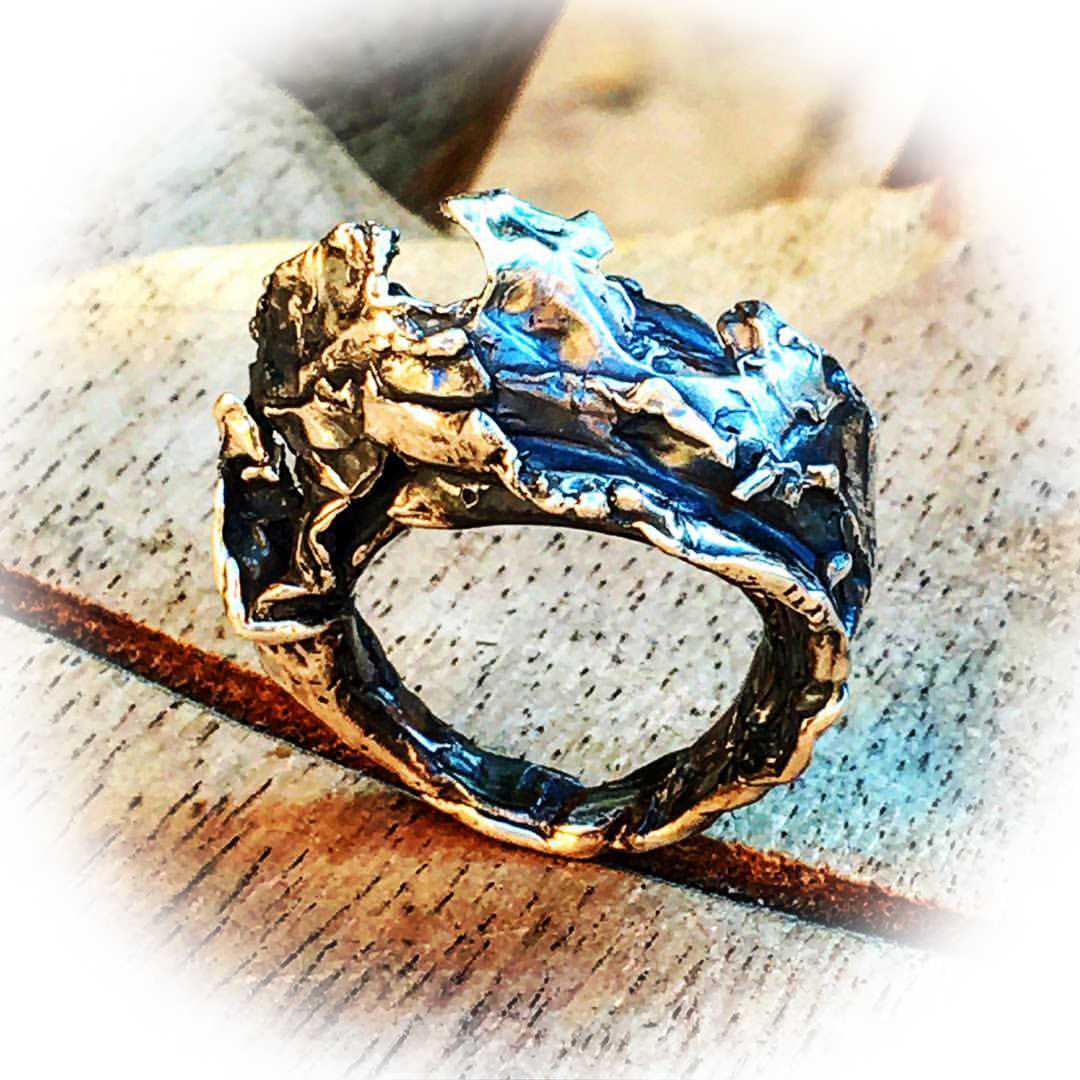
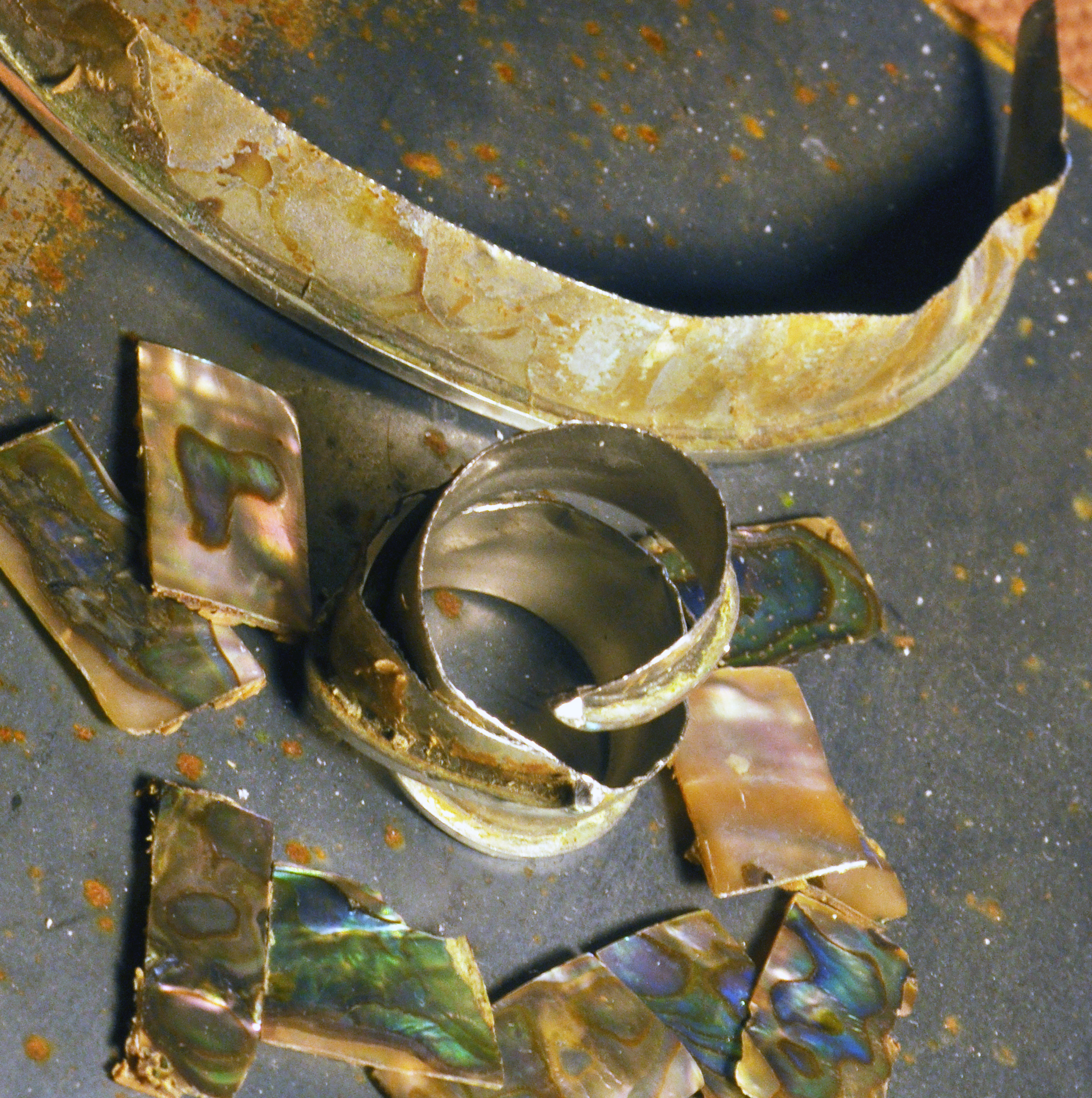
A ring made from cold cannibalization of a vintage bracelet (brass/copper with mother-of-pearl inserts). Only iron shears, hammer, pliers, chisel. Five rings born from one bracelet — five brothers with the same DNA. Mother-of-pearl remains as a "second-life gem".
« The ring to fight demons. » A unique piece with aggressive, almost tribal texture, plated in iridescent red/yellow gold. Whoever wears it seeks protection from their inner ghosts. Universal narrative — anyone who has faced a difficult night understands.
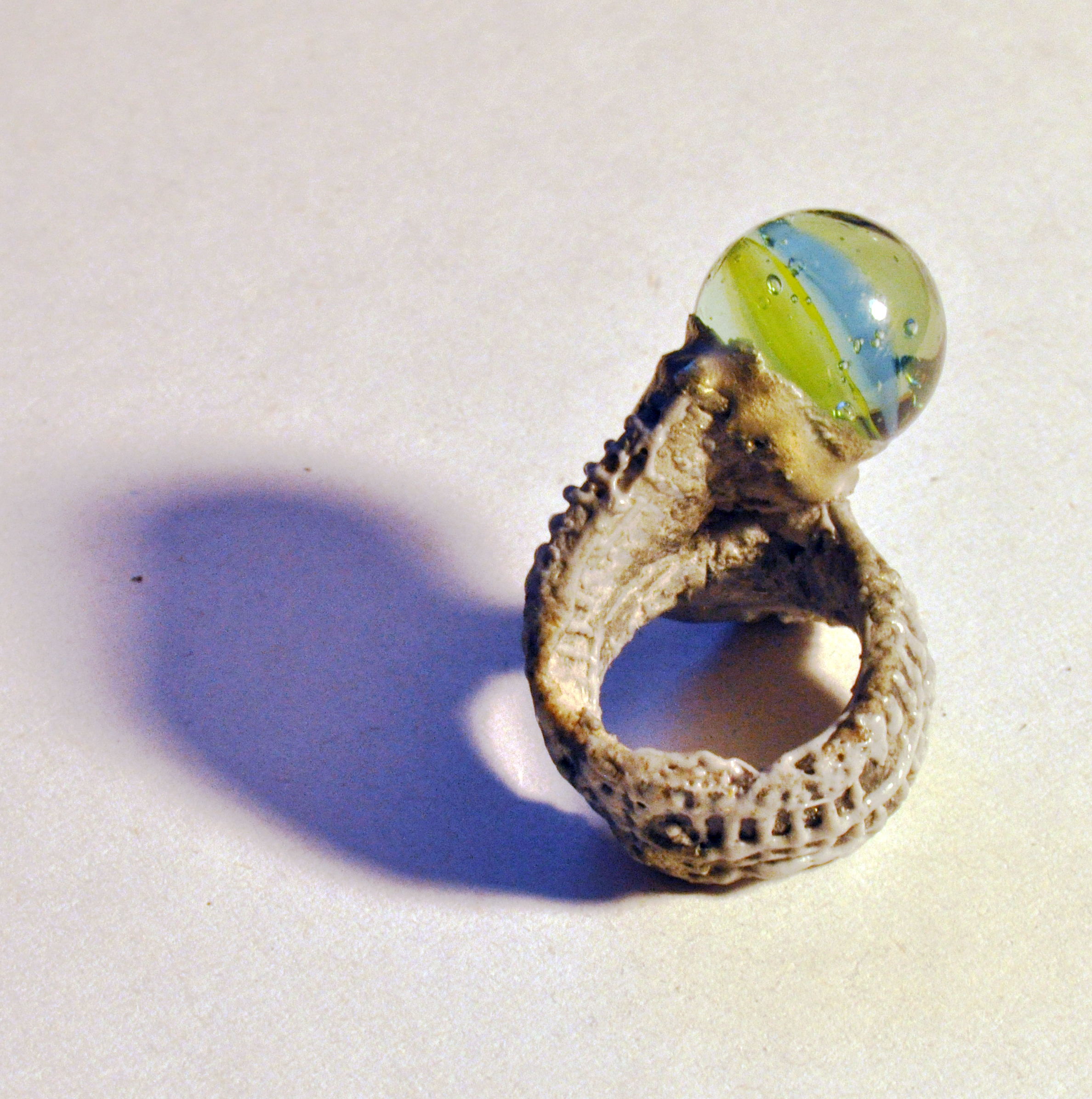
An experimental master of your choice from the research line: plastic wall plug transformed into ring, glass marble as a "stone", beach glass set, hot-bent ice cream spoon. Only four tools (lighter + hands + pliers + cylinder). Unique pieces, seeds of future series.
An EJan ring made from iron tube scraps donated by a Milanese carpenter/blacksmith. The certificate bears the donor artisan's name and workshop of origin. Communicates the recycling method extended to the local artisan community.
A master obtained with the acrylic resin + quartz powder stucco technique, with colored effects (blue/violet, red/amber, green/emerald). Not wearable without final cataphoresis (optional at +€80). Designed for display case as standalone micro-sculpture.
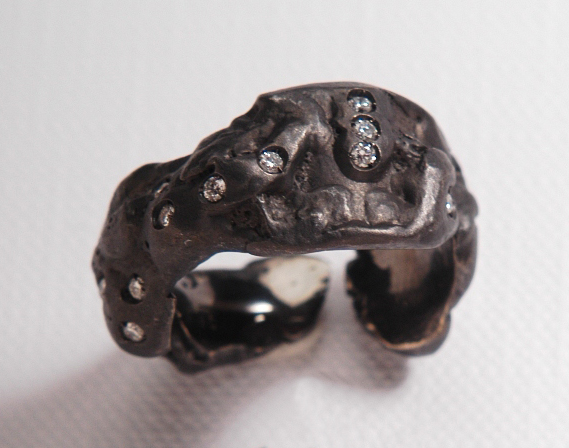
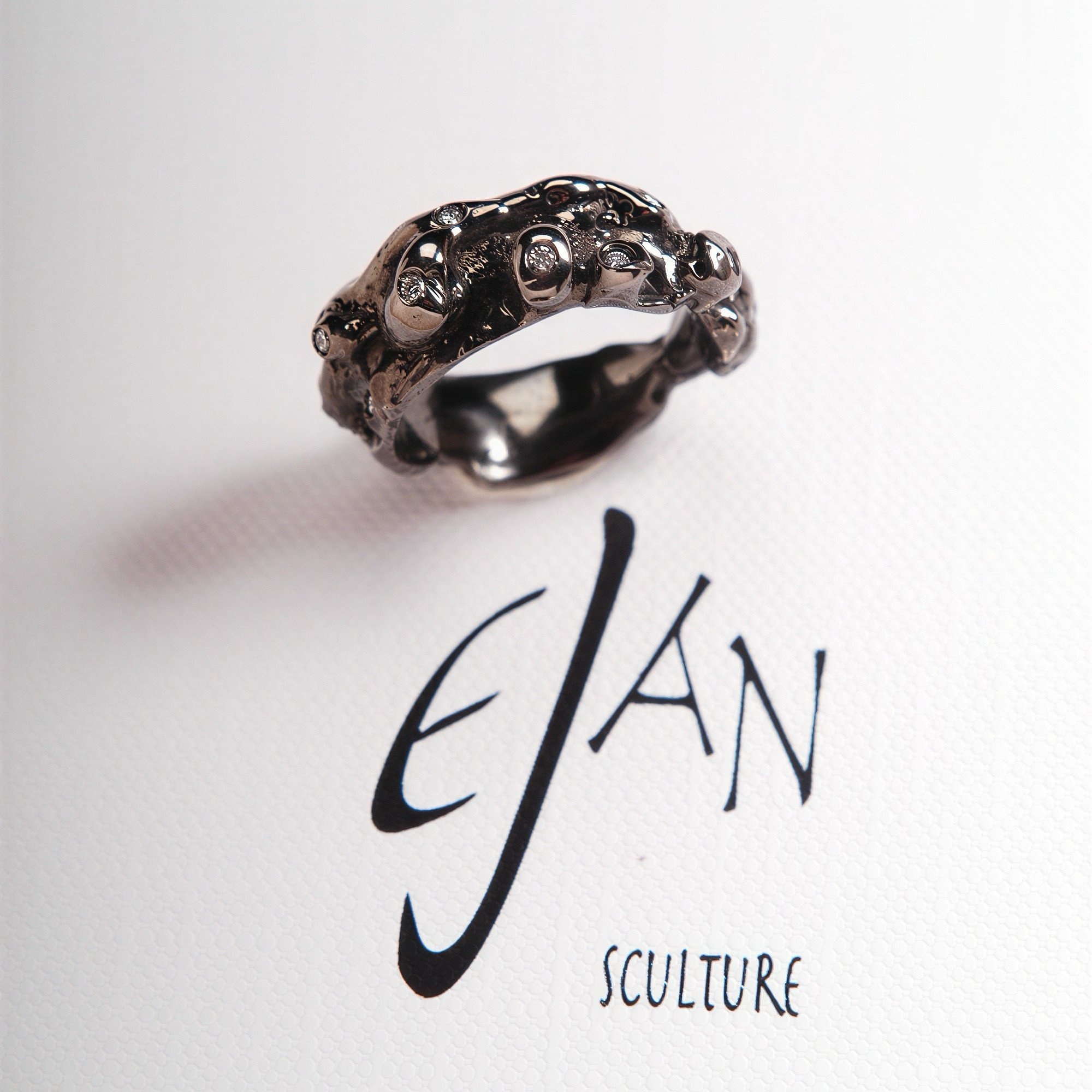
An Aliens Rings ring with 5-8 precious stones set (white diamonds, black diamonds, red rubies, or mixed pavé). Metal choice: 925 silver, yellow gold, white gold, black burnished. Places EJan in dialogue with high jewelry while maintaining sculptural identity.
The secret of the method
ejan janruju doesn't work with goldsmith tools. He works with blacksmith, welder, metal carpenter tools. That's why his pieces don't look like jewelry — they look like sculptures.
Arc welder · MIG/MAG wire welder · Grinder with steel disc · Grinder with iron brush · File · Hammer (blacksmith, flat-head, mallet) · Various pliers · Iron shears (tin snips) · Sharp-blade pliers · Round chisel/cylinder as mandrel · Tobacconist lighter · Butane torch · Drill · Milling machine · Box cutter · the artist's hands that resist fire.
40-page EJan Manifesto PDF with the 25-year story. HD wallpaper of the collection. Your name virtually engraved in the acknowledgments on the site, forever.
Custom artist's certificate hand-signed by ejan janruju on cotton paper. Limited-edition silkscreen postcard (200 pcs). Includes The Signal.
1 Aliens Rings BO-II ring — bronze/brass cast from wax-plastic model. Milled plane + laser code engraving on front. Signed certificate.
1 Aliens Rings BO-I ring — bronze/brass cast directly from a hand-forged FE master. Inherits the imprint of the artist's hand on the metal.
1 Aliens Rings AR ring — 925 silver artisanally cast. Burnishing, cataphoresis, premium wooden packaging. The noble metal of the collection.
1 unique master of your choice from non-metallic categories: unearthed copper (RA), plastic melted with lighter (PL), carved wood (LE), mixed materials (MX — wrenches, caps, reshaped screws). Each piece carries its visible biography.
1 preview ring from the new 3i.Atlas Collection 2025 — the cosmic evolution of EJan. Pieces that will not enter the distribution channel before 2027-2028.
1 hand-forged Aliens Rings FE ring: iron and copper forged on the anvil by JanRuju. Only 40 exist in the world, we offer 8. Handwritten letter from the artist included.
Master+clone pair: 1 hand-worked wax master (sculptural display object, not wearable) + 1 clone in 925 silver cast from the master (wearable). The "before" and "after" of the artistic gesture in a single composite object.
Scenographic amber resin display case with rechargeable RGB LED. Curated set of 3 rings: 1 BO-II + 1 BO-I + 1 AR. Wooden crate packaging. For boutiques, galleries, collectors.
Set of 3 rings chosen by the artist (1 FE master + 1 BO-I clone + 1 AR clone). Private studio visit at the camper-workshop with JanRuju (location to be agreed). Signed artist book. Dinner together. Only 3 in the world.
ejan janruju's work is already present and recognized. National press has covered his projects in the past. This is the heritage on which the Kickstarter campaign rests.
With the birth of his daughter Elea, ejan janruju forges the first EJan ring from iron collected in the streets of Milan's Parco Sud. The silent beginning of twenty-five years of research outside the market.
The collection hanging from a string in the studio. No sales, no gallery. Just the archive of a gesture repeated every day.
ejan janruju is among the creators of the project that transforms vintage FIAT 600s into artworks. The first 600 painted by artist Willow in Milan.
First systematic photography of the collection. ejan janruju begins keeping a visual archive — the memory of the studio.
ejan janruju starts a multi-participatory artistic platform: artists from Italy, Lebanon, Brazil. 18 works in catalog. A movement that continues to grow.
150 documented pieces. First numbering is born. Distinction between original masters and cast clones. The project structure takes final shape.
220 pieces in collection. ejan janruju begins to experiment with laser engraving of the serial code on the milled plane — the technical signature of the project consolidates.
214 official pieces: 115 wearable masters + 5 wax masters + 94 clones. Ten material categories. The historical series closes, the collection's biography is complete.
The new collection begins — the cosmic evolution of EJan. Pieces reserved for cultural anticipators supporting the Kickstarter campaign.
For the first time in 25 years the collection leaves the studio. 96 pieces committed on Kickstarter (45% of available corpus).
10-14 March 2027: EJan presents in Munich with ALIENS RINGS and the official preview of the 3i.Atlas Collection 2025.
The ALIENS RINGS collection already exists physically. The operational challenges concern personalization, logistics, shipping — not product feasibility.
Each piece must be milled underneath (base plane), laser-engraved on the front with its own code, accompanied by manually signed certificate, packed in dedicated packaging. The cycle requires controlled timing.
Each piece travels tracked and insured. Declared value = Kickstarter price. Partner courier for artworks with customs experience for original works (HS 9703 90 00).
After the campaign you will receive a form to specify size, finish, dedication on the certificate. Assignment of the specific piece happens backer-by-backer: no randomization.
All backers receive a monthly Kickstarter update with photos of the studio and pieces in preparation. If there are delays, we declare them before the platform notices.
Each ring is photographed before shipping. If upon receipt there is damage or discrepancy, replacement without discussion within 7 days.
Kickstarter is all-or-nothing: if we don't reach €30,000, no card is charged. If we reach the target but delays emerge, we communicate clearly and offer concrete compensations.
Because ejan janruju is a sculptor, not a goldsmith. Each piece is born as artwork in small format — numbered, unique, certified, with a milled plane underneath that allows it to be displayed as a standalone sculpture. The finger is the pedestal chosen for these sculptures, but not the only one: they still live on the shelf.
The MASTER is the unique original piece — the one the artist created with his hands from found material (iron, copper, aluminum, plastic, wood, mixed materials). If the material is wearable, the master remains the final piece. If the material isn't wearable (wax), the master is used as a mold to cast a CLONE in noble metal (silver, bronze, brass). A clone is still a unique piece, but is born from a specific master — which in turn is lost in the casting process or preserved (in Genesis).
It's the flat surface obtained by milling under every EJan piece. It has two functions: (1) perfect surface for laser engraving of the unique serial code; (2) allows the ring to stand on its own, as a standalone micro-sculpture. You therefore receive a ring and a sculpture simultaneously in the same object — it lives on the hand and lives on the shelf.
Each piece has a three-segment code laser-engraved on the milled plane: material prefix (FE iron, RA copper, AL aluminum, PL plastic, LE wood, MX mixed, CE wax, BO bronze/brass, AR silver) + numeric progressive + optional clone/finish suffix (-AR silver, -BR bronze, -AU-B/G/R/V/N gold in 5 colors). Example: FE-023 = iron master n° 23. BO-041 = bronze clone n° 041. AR-015-AU-G = silver clone n° 15 with yellow gold plating.
Each ring has its own code laser-engraved on the milled plane + certificate of authenticity printed on cotton paper, manually signed by ejan janruju, with the specific data of the piece (materials, techniques, completion date, optional dedication). The code is registered in the artist's database and verifiable upon request.
After the end of the campaign you will receive a form with a printable size guide in PDF. You can also measure a ring you already wear (inner diameter). Each piece is individually assigned based on your size, finish/color preference and availability of the right piece.
The "Fossil" tier (€800) gives you access to 1 unique master to choose from non-metallic categories: unearthed COPPER (RA), melted PLASTIC (PL), carved WOOD (LE), or MIXED MATERIALS (MX — wrenches, caps, reshaped screws). In the post-campaign form you indicate the preferred category and — if available — the specific piece from a list.
The collection already exists. Time is needed for personalization (plane milling, laser engraving, certificate, packaging) and for tracked shipping. Timing: first pieces between January and February 2027 (BO-II, BO-I, AR, FE tiers), high tiers between March-April 2027 (Portal, Constellation, Genesis).
Yes. Tracked shipping + insurance included for Italy, EU, UK, USA, Canada, Australia, Japan. Extra for other countries (calculated case by case at pledge time). For artworks we use the customs classification HS 9703 90 00 which exempts from duties in many countries.
No charge. Kickstarter works all-or-nothing: if we don't reach €30,000, no card is charged. If we make it, we start together the journey toward Munich Jewellery Week 2027.
Yes. At the post-campaign form you can indicate a different shipping address and request a personalized card. The certificate can be addressed to you or the gift recipient.
Tier 11 "The Constellation" backers are entitled to a half-day private session at the camper-workshop (location communicated after pledge — it could be a festival, a gathering, an art market anywhere in Italy or Europe). For other tiers, ejan janruju considers organizing collective open-camper sessions when parked in one place for several days.
The Kickstarter campaign is the launch ramp toward Munich Jewellery Week 2027 (10-14 March). All backers receive an official invitation to the collection presentation in Munich. Participation is optional.
Milan, 1980s. Gianluigi Ruju is twenty when he enters the ultra-modern offices of Milanofiori — glass palaces, an incredible, surreal environment. It's 1986. Forum Colorum, innovative startup founded by Nino Tatriele inside the Italian branch of a German multinational leader in paints, gives him the first technological dream: working on the Personal Iris 4D 20 by Silicon Graphics — the same workstation used to create Roger Rabbit. Paints, high-definition plotters, CNC, projects for Alfa Romeo, Mercedes, Volkswagen, BMW. It's there he learns on the field the secrets of color applied to car bodywork — a technical DNA that will return, decades later, in sculpture.
From there onwards forty years of work crossed inside the rules of the Italian and European game: dozens of realities, dozens of projects, dozens of assignments. Creative director, general manager, president of a non-profit, strategic consultant, startup founder, cultural curator. He builds teams, brands, products, campaigns, television formats, international communities — public and private projects, social causes, profit and non-profit worlds. A dense, recognized path where ideas and people follow one another like seasons.
In 2007 he co-founds with Giuseppe Iavicoli Puzzle4Peace: installation of three-dimensional puzzle-shaped lamps that interlock to form a large white wall with luminescent red inserts. A message of peace made of light and modular form. In 2016 the Court of Milan recognizes the creative character of the work and condemns a well-known pharmaceutical multinational (Bayer) for plagiarism in a TV commercial — the sentence becomes Italian legal precedent in the field of artistic installations and copyright.
In parallel, in silence, since 2000 he has been working on EJan. The day his daughter Elea is born he forges her first ring from an iron nail picked up on the street. From there, twenty-five years of secret work: he collects matter on the street, transforms it, accumulates it. No sales, no gallery, no catalog. Just the daily gesture of a father sculpting for his little girl.
Since 2009 Forum Colorum / Gli Artmobilisti is born — his most visionary idea: vintage FIAT 600 conferred by their owners, restored, converted to electric traction, entrusted to artists who transform them into canvases in movement. The first 600 painted by Willow in Milan in 2009 is documented by Quattroruote (January 2010) and La Repubblica Milano (October 30, 2010). The final dream is the Green Serpent — a convoy of electrified and painted cars crossing Italy as a traveling exhibition of sustainability and shared beauty.
Since 2014 he founds Il Resinismo — Community of Mentally Resined Artists: 18 catalogued modular works, 9 artists from Italy, Lebanon, Brazil (Lami Daher, Barbara Crimella, Guido Averna, Pietro Finelli, Renee' Francavilla, Ernesto Jannini, Ana Paula Brodt, Dutygorn, JanRuju). Each piece is a tile of a mosaic under continuous construction. «Resinism is compensated transgression: using a non-ecological material to create works that save tons of scraps from landfill.»
The Sculture Aliene Prototophe — unique pieces from 10 cm to 5 meters, organic sensual forms coated in resin and illuminated from within. The Sellone — giant historical motorcycle saddles transformed into sofas and armchairs (JanRuju / Pala Designers). All under the umbrella of SpazioAlieno — the creative ecosystem that for years was his forge of ideas, where iron becomes gold, scrap becomes sculpture, waste becomes design.
In 2024 the historical series ALIENS RINGS of EJan officially closes at 214 pieces. In 2025 the new 3i.Atlas Collection is born. But the whole corpus remains locked in his world — pieces hanging from a string, photographed one by one, kept like geological sediment of twenty-five years.
Then, in mid-2026, the radical choice. The camper. Freedom.
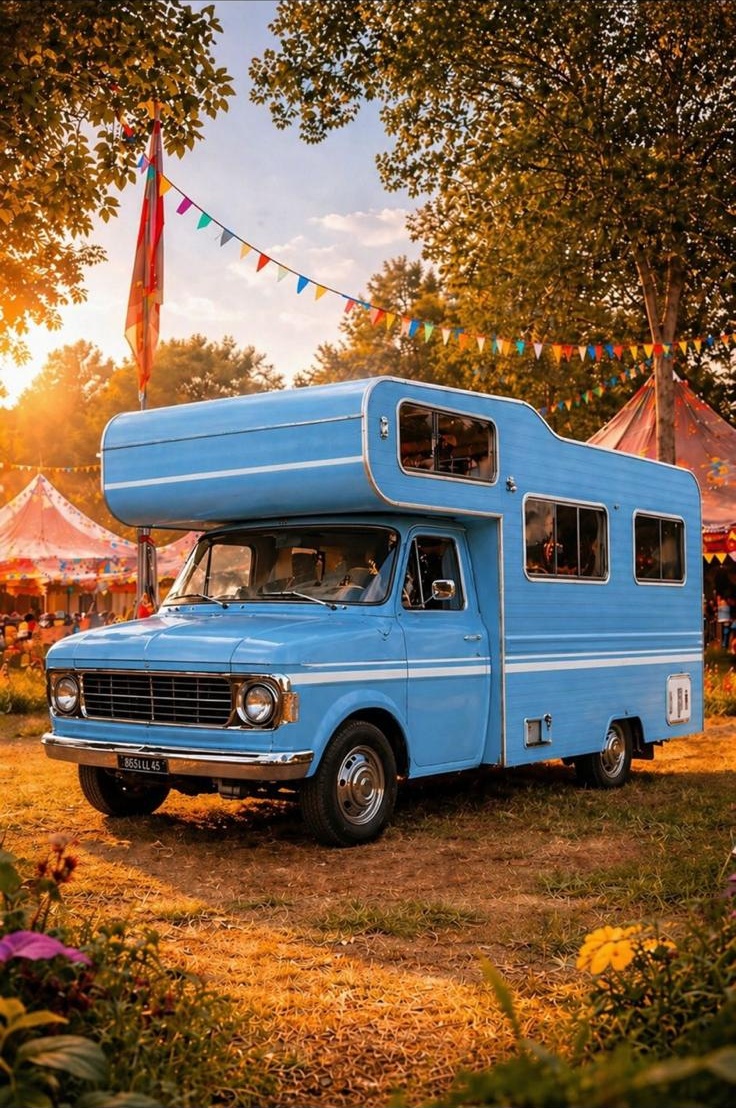
Mid-2026. After forty years of work inside dozens of realities, after building and directing and presiding, the radical choice begins to mature. Close that season. Change life. Not retirement, not escape: a transformation — the same word I use for the iron and plastic I bring into the workshop.
End of May 2026. I buy a 1981 Ford camper, completely to be restored. A vintage vehicle with its own history — bodywork to redo, interiors to disassemble piece by piece, mechanics to overhaul. Not a modern camper: a camper that has already had a life and that I'm transforming to have another. Like my rings.
July 2026 · today. The restoration is in progress. Every week I spend days in the workshop — bodywork, electrical, interior furnishings. The camper progressively becomes home and workshop together: berth above the cabin, small kitchen, transformable work table, drawers for tools and matter, natural light from the large windows.
End of September 2026. Expected delivery date. The camper will be ready — restored, functional, equipped.
Late 2026. The new life takes shape. I climb into the camper and start traveling. Italy, Europe. Art festivals, markets, gatherings, isolated places. A new landscape every day. New inspiration every awakening.
The camper is the crowning of an idea of freedom I've been maturing for years: the possibility of letting creativity enter from itinerancy, of waking up in a place I don't know, of collecting matter on streets I've never walked. EJan Wearable Sculptures is the first thing born from this new life — because twenty-five years of silent sculpture have finally found the right vehicle to leave the studio.
EJan Wearable Sculptures is one of five projects developed by Gianluigi Ruju: Il Resinismo (international community since 2014) · Sculture Aliene Prototophe · Forum Colorum / Gli Artmobilisti (since 2009 — covered by Quattroruote and La Repubblica) · Sellone.
The Kickstarter campaign launches in autumn 2026. Subscribe now for early-bird access (12-15% discount) and 24-hour advance notice before public launch.
No spam. Just 3-4 emails until launch. Unsubscribe anytime.